IT
  
Attualmente si sta visualizzando la versione Italy del sito.
Volete passare al vostro sito locale?
<  Ultima edizione


Free Sample Issue
Provate un campione gratuito di Wildlife Australia
Provate un campione gratuito di

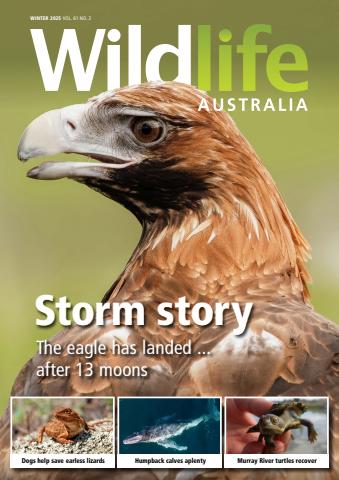
Wildlife Australia Magazine Winter 2025 Edizione posteriore

English
5 Recensioni   •  English   •   Leisure Interest (Wildlife)
Only €4,99
Conserving the known unknowns

THERE ARE examples in this edition of challenges that increasingly face conservationists of the natural world. Let’s call them ‘known unknowns’.

Any time humankind expands its footprint – geographically or, increasingly, technologically – there will be some effect on the natural world. That is known. Whether it is positive, or negative, or has no measurable effect, that is unknown.

Take Australia’s quest for Net Zero emissions using wind farms in remote areas. From a ‘clean energy’ standpoint, the ‘knowns’ are mostly positive. The bigger and better designed they are, the more electricity they produce reliably – and often after dark when the solar panels are asleep.

They are remote from townships, so the whine of blades and turbines does not disturb. This is a known known for the wind generation industry. But it is a ‘known unknown’ for Australia’s ecosystems and wildlife.

What is known is that Australian native animals communicate in unique ways – and in unique tones. The low range frequencies, at which koalas and gliders communicate, fall into the spectrum emitted by industrial wind farms.

This is an under-researched known unknown.
In North Queensland, where these farms are planned for large swathes of koala and glider ridgetop habitats, research shows koalas avoid these wind farm clusters by distances of up to 4km.

Wildlife ecologist Roger Martin, who tested these wind farm areas for changes in wildlife behaviour, is calling for a halt to all windfarm construction until the results of this research are written into the terms of Australia’s Environmental Protection and Biodiversity Conservation (EPBC) Act.

For the EPBC Act, this is a known unknown that must be updated so wind farms know how to comply.

Otherwise the ‘known known’ outcome from such a situation will be like so many others: known negative for wildlife.
read more read less
Wildlife Australia Preview Pages Wildlife Australia Preview Pages Wildlife Australia Preview Pages Wildlife Australia Preview Pages Wildlife Australia Preview Pages Wildlife Australia Preview Pages Wildlife Australia Preview Pages Wildlife Australia Preview Pages

Wildlife Australia

Winter 2025 Conserving the known unknowns THERE ARE examples in this edition of challenges that increasingly face conservationists of the natural world. Let’s call them ‘known unknowns’. Any time humankind expands its footprint – geographically or, increasingly, technologically – there will be some effect on the natural world. That is known. Whether it is positive, or negative, or has no measurable effect, that is unknown. Take Australia’s quest for Net Zero emissions using wind farms in remote areas. From a ‘clean energy’ standpoint, the ‘knowns’ are mostly positive. The bigger and better designed they are, the more electricity they produce reliably – and often after dark when the solar panels are asleep. They are remote from townships, so the whine of blades and turbines does not disturb. This is a known known for the wind generation industry. But it is a ‘known unknown’ for Australia’s ecosystems and wildlife. What is known is that Australian native animals communicate in unique ways – and in unique tones. The low range frequencies, at which koalas and gliders communicate, fall into the spectrum emitted by industrial wind farms. This is an under-researched known unknown. In North Queensland, where these farms are planned for large swathes of koala and glider ridgetop habitats, research shows koalas avoid these wind farm clusters by distances of up to 4km. Wildlife ecologist Roger Martin, who tested these wind farm areas for changes in wildlife behaviour, is calling for a halt to all windfarm construction until the results of this research are written into the terms of Australia’s Environmental Protection and Biodiversity Conservation (EPBC) Act. For the EPBC Act, this is a known unknown that must be updated so wind farms know how to comply. Otherwise the ‘known known’ outcome from such a situation will be like so many others: known negative for wildlife.


SELEZIONARE IL FORMATO:
Accesso immediato

Offerte digitali disponibili:

Singolo numero arretrato digitale Winter 2025
 
€4,99 / issue
Questo numero e gli altri numeri arretrati non sono inclusi in un Wildlife Australia abbonamento. Gli abbonamenti includono l'ultimo numero regolare e i nuovi numeri usciti durante l'abbonamento e partono da un prezzo minimo di €3,75 per numero . Se volete abbonarvi, date un'occhiata al nostro sito web Opzioni di abbonamento
I risparmi sono calcolati sull'acquisto comparabile di singoli numeri su un periodo di abbonamento annualizzato e possono variare rispetto agli importi pubblicizzati. I calcoli sono solo a scopo illustrativo. Gli abbonamenti digitali includono l'ultimo numero e tutti i numeri regolari pubblicati durante l'abbonamento, se non diversamente indicato. L'abbonamento scelto si rinnoverà automaticamente a meno che non venga annullato nell'area Il mio account fino a 24 ore prima della scadenza dell'abbonamento in corso.

Wildlife Australia issue Winter 2025

Wildlife Australia  |  Winter 2025  


Conserving the known unknowns

THERE ARE examples in this edition of challenges that increasingly face conservationists of the natural world. Let’s call them ‘known unknowns’.

Any time humankind expands its footprint – geographically or, increasingly, technologically – there will be some effect on the natural world. That is known. Whether it is positive, or negative, or has no measurable effect, that is unknown.

Take Australia’s quest for Net Zero emissions using wind farms in remote areas. From a ‘clean energy’ standpoint, the ‘knowns’ are mostly positive. The bigger and better designed they are, the more electricity they produce reliably – and often after dark when the solar panels are asleep.

They are remote from townships, so the whine of blades and turbines does not disturb. This is a known known for the wind generation industry. But it is a ‘known unknown’ for Australia’s ecosystems and wildlife.

What is known is that Australian native animals communicate in unique ways – and in unique tones. The low range frequencies, at which koalas and gliders communicate, fall into the spectrum emitted by industrial wind farms.

This is an under-researched known unknown.
In North Queensland, where these farms are planned for large swathes of koala and glider ridgetop habitats, research shows koalas avoid these wind farm clusters by distances of up to 4km.

Wildlife ecologist Roger Martin, who tested these wind farm areas for changes in wildlife behaviour, is calling for a halt to all windfarm construction until the results of this research are written into the terms of Australia’s Environmental Protection and Biodiversity Conservation (EPBC) Act.

For the EPBC Act, this is a known unknown that must be updated so wind farms know how to comply.

Otherwise the ‘known known’ outcome from such a situation will be like so many others: known negative for wildlife.
Per saperne di più leggere di meno
Embrace a wilder life – download Wildlife Australia, the country’s leading nature magazine. Fifty pages of insightful and thought-provoking articles and stunning photographs.
Celebration: Celebrate the essence of Australia – its vast wild landscapes and distinctive wildlife, most found nowhere else in the world
Insights: The articles are written by leading researchers and those whose care for nature comes from deep insights. You won’t find this information by Googling.
Beauty: Immerse yourself in the allure and charm of wildlife with photos by some of Australia’s leading nature photographers.
Understanding: Wildlife Australia is a hub for people who value their relationship with nature and know it is enriched by knowledge. The nature experience can be powerful, but often requires interpretation.
Inspiration: Be inspired by what people are doing to understand and protect nature.
Conservation: Wildlife Australia is a not-for-profit magazine and all profits go to protect nature.

A subscription to Wildlife Australia won't cure arthritis or tonsillitis, but is great for two modern ailments: dislocation from nature and existential malaise. Download the app and see.

Come abbonati riceverete i seguenti vantaggi:


•  Uno sconto sul prezzo di vendita della rivista
•  Nuove edizioni consegnate sul tuo dispositivo il giorno stesso dell'uscita
•  Non perderete mai un numero
•  Siete protetti dagli aumenti di prezzo che potrebbero verificarsi nel corso dell'anno

Riceverete 4 edizioni durante un periodo di 1 anno Wildlife Australia abbonamento alla rivista.

Nota: le edizioni digitali non includono gli articoli di copertina o i supplementi che si trovano nelle copie stampate.

Il vostro acquisto su Pocketmags.com può essere letto su una delle seguenti piattaforme.


Potete leggere qui sul sito web o scaricare l'applicazione per la vostra piattaforma, ricordandovi di effettuare il login con il vostro nome utente e la vostra password Pocketmags.

Apple Pocketmags Online Pocketmags Google Pocketmags
L'app Pocketmags funziona su tutti i dispositivi iPad e iPhone con iOS 15.6 o versioni successive, Android 8.0 o versioni successive e sui tablet Amazon Fire dal 2018 in poi, anche se i possessori di modelli Fire precedenti possono controllare l'Amazon Appstore direttamente sul proprio dispositivo per confermare la compatibilità. Per gli utenti iOS, consigliamo di utilizzare un dispositivo in grado di eseguire l'ultima versione di iOS per ottenere prestazioni e stabilità ottimali, poiché l'hardware più datato con minore potenza di elaborazione e RAM potrebbe risentire di un caricamento delle pagine più lento o di occasionali problemi di stabilità dovuti ai limiti di memoria del dispositivo. In alternativa, il nostro lettore web funziona con qualsiasi browser moderno compatibile con HTML5, anche se consigliamo Chrome o Firefox per un'esperienza ottimale su PC e Mac.
5,0
/5
Basato su 5 Recensioni dei clienti
5
5
4
0
3
0
2
0
1
0
Visualizza le recensioni

Articoli in questo numero


Di seguito una selezione di articoli in Wildlife Australia Winter 2025.

Free Sample Issue
Provate un campione gratuito di Wildlife Australia
Chat
X
Supporto Pocketmags