IT
  
Attualmente si sta visualizzando la versione Italy del sito.
Volete passare al vostro sito locale?
Ultima edizione


Free Sample Issue
Provate un campione gratuito di Wildlife Australia
Provate un campione gratuito di

Wildlife Australia Magazine Spring 2024 Edizione posteriore

English
5 Recensioni   •  English   •   Leisure Interest (Wildlife)
Only €4,99
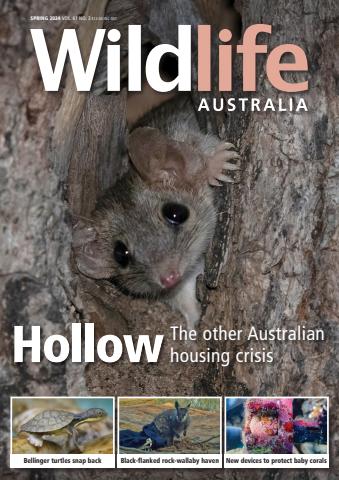
Hallowed mission to protect hollows

AUSTRALIAN wildlife is unique in its dependency on tree hollows – even dead and fallen tree hollows.

This edition looks at the need to protect old-growth bushland, with its abundance of hollows, versus the ease with which that thriving forest can be flattened.

Some ecosystems are at inflection points that could result in local disappearances of koalas, antechinus, possums and – most telling of all – our unique gliders, largely because of bush clearing and the wholesale loss of hollows.

Wildlife Information, Rescue and Education Service (WIRES) speaks plainly about the role hollows play in Australia’s bush ecosystem health.

“Small hollows with narrow entrances suitable for small animals such as the brush-tailed phascogale and the eastern pygmy-possum take about 100 years to form,” WIRES reports. “Hollows of a medium size and suitable for animals such as parrots will take around 200 years to form.

“In Australia many native species need tree hollows, including 17% of bird species, 42% of mammals and 28% of reptiles. They include bats, possums, gliders, owls, parrots, antechinus, ducks, rosellas and kingfishers as well as numerous species of snakes, frogs and skinks.”
This puts the recent dialogue Wildlife Queensland leaders had with Queensland Government environment officials into perspective, leading up to government assurances to secure vital greater glider forest habitat.

A few weeks after this meeting, a Wildlife Queensland team of experts and citizen scientists ventured into St Mary State Forest, near Maryborough, to document a population of greater gliders (Petauroides volans) – but were shocked to see logging taking place less than 3km from this site.

This edition features a range of stories that state and re-state the importance of protecting bushland in which hollows are a feature. Hollows could rightfully be named as one of Australia’s greatest natural resources.
read more read less
Wildlife Australia Preview Pages Wildlife Australia Preview Pages Wildlife Australia Preview Pages Wildlife Australia Preview Pages Wildlife Australia Preview Pages Wildlife Australia Preview Pages Wildlife Australia Preview Pages Wildlife Australia Preview Pages

Wildlife Australia

Spring 2024 Hallowed mission to protect hollows AUSTRALIAN wildlife is unique in its dependency on tree hollows – even dead and fallen tree hollows. This edition looks at the need to protect old-growth bushland, with its abundance of hollows, versus the ease with which that thriving forest can be flattened. Some ecosystems are at inflection points that could result in local disappearances of koalas, antechinus, possums and – most telling of all – our unique gliders, largely because of bush clearing and the wholesale loss of hollows. Wildlife Information, Rescue and Education Service (WIRES) speaks plainly about the role hollows play in Australia’s bush ecosystem health. “Small hollows with narrow entrances suitable for small animals such as the brush-tailed phascogale and the eastern pygmy-possum take about 100 years to form,” WIRES reports. “Hollows of a medium size and suitable for animals such as parrots will take around 200 years to form. “In Australia many native species need tree hollows, including 17% of bird species, 42% of mammals and 28% of reptiles. They include bats, possums, gliders, owls, parrots, antechinus, ducks, rosellas and kingfishers as well as numerous species of snakes, frogs and skinks.” This puts the recent dialogue Wildlife Queensland leaders had with Queensland Government environment officials into perspective, leading up to government assurances to secure vital greater glider forest habitat. A few weeks after this meeting, a Wildlife Queensland team of experts and citizen scientists ventured into St Mary State Forest, near Maryborough, to document a population of greater gliders (Petauroides volans) – but were shocked to see logging taking place less than 3km from this site. This edition features a range of stories that state and re-state the importance of protecting bushland in which hollows are a feature. Hollows could rightfully be named as one of Australia’s greatest natural resources.


SELEZIONARE IL FORMATO:
Accesso immediato

Offerte digitali disponibili:

Singolo numero arretrato digitale Spring 2024
 
4,99 / issue
Questo numero e gli altri numeri arretrati non sono inclusi in un Wildlife Australia abbonamento. Gli abbonamenti includono l'ultimo numero regolare e i nuovi numeri usciti durante l'abbonamento e partono da un prezzo minimo di €3,75 per numero . Se volete abbonarvi, date un'occhiata al nostro sito web Opzioni di abbonamento
I risparmi sono calcolati sull'acquisto comparabile di singoli numeri su un periodo di abbonamento annualizzato e possono variare rispetto agli importi pubblicizzati. I calcoli sono solo a scopo illustrativo. Gli abbonamenti digitali includono l'ultimo numero e tutti i numeri regolari pubblicati durante l'abbonamento, se non diversamente indicato. L'abbonamento scelto si rinnoverà automaticamente a meno che non venga annullato nell'area Il mio account fino a 24 ore prima della scadenza dell'abbonamento in corso.

Wildlife Australia issue Spring 2024

Wildlife Australia  |  Spring 2024  


Hallowed mission to protect hollows

AUSTRALIAN wildlife is unique in its dependency on tree hollows – even dead and fallen tree hollows.

This edition looks at the need to protect old-growth bushland, with its abundance of hollows, versus the ease with which that thriving forest can be flattened.

Some ecosystems are at inflection points that could result in local disappearances of koalas, antechinus, possums and – most telling of all – our unique gliders, largely because of bush clearing and the wholesale loss of hollows.

Wildlife Information, Rescue and Education Service (WIRES) speaks plainly about the role hollows play in Australia’s bush ecosystem health.

“Small hollows with narrow entrances suitable for small animals such as the brush-tailed phascogale and the eastern pygmy-possum take about 100 years to form,” WIRES reports. “Hollows of a medium size and suitable for animals such as parrots will take around 200 years to form.

“In Australia many native species need tree hollows, including 17% of bird species, 42% of mammals and 28% of reptiles. They include bats, possums, gliders, owls, parrots, antechinus, ducks, rosellas and kingfishers as well as numerous species of snakes, frogs and skinks.”
This puts the recent dialogue Wildlife Queensland leaders had with Queensland Government environment officials into perspective, leading up to government assurances to secure vital greater glider forest habitat.

A few weeks after this meeting, a Wildlife Queensland team of experts and citizen scientists ventured into St Mary State Forest, near Maryborough, to document a population of greater gliders (Petauroides volans) – but were shocked to see logging taking place less than 3km from this site.

This edition features a range of stories that state and re-state the importance of protecting bushland in which hollows are a feature. Hollows could rightfully be named as one of Australia’s greatest natural resources.
Per saperne di più leggere di meno
Embrace a wilder life – download Wildlife Australia, the country’s leading nature magazine. Fifty pages of insightful and thought-provoking articles and stunning photographs.
Celebration: Celebrate the essence of Australia – its vast wild landscapes and distinctive wildlife, most found nowhere else in the world
Insights: The articles are written by leading researchers and those whose care for nature comes from deep insights. You won’t find this information by Googling.
Beauty: Immerse yourself in the allure and charm of wildlife with photos by some of Australia’s leading nature photographers.
Understanding: Wildlife Australia is a hub for people who value their relationship with nature and know it is enriched by knowledge. The nature experience can be powerful, but often requires interpretation.
Inspiration: Be inspired by what people are doing to understand and protect nature.
Conservation: Wildlife Australia is a not-for-profit magazine and all profits go to protect nature.

A subscription to Wildlife Australia won't cure arthritis or tonsillitis, but is great for two modern ailments: dislocation from nature and existential malaise. Download the app and see.

Come abbonati riceverete i seguenti vantaggi:


•  Uno sconto sul prezzo di vendita della rivista
•  Nuove edizioni consegnate sul tuo dispositivo il giorno stesso dell'uscita
•  Non perderete mai un numero
•  Siete protetti dagli aumenti di prezzo che potrebbero verificarsi nel corso dell'anno

Riceverete 4 edizioni durante un periodo di 1 anno Wildlife Australia abbonamento alla rivista.

Nota: le edizioni digitali non includono gli articoli di copertina o i supplementi che si trovano nelle copie stampate.

Il vostro acquisto su Pocketmags.com può essere letto su una delle seguenti piattaforme.


Potete leggere qui sul sito web o scaricare l'applicazione per la vostra piattaforma, ricordandovi di effettuare il login con il vostro nome utente e la vostra password Pocketmags.

Apple Pocketmags Online Pocketmags Google Pocketmags
L'app Pocketmags funziona su tutti i dispositivi iPad e iPhone con iOS 15.6 o versioni successive, Android 8.0 o versioni successive e sui tablet Amazon Fire dal 2018 in poi, anche se i possessori di modelli Fire precedenti possono controllare l'Amazon Appstore direttamente sul proprio dispositivo per confermare la compatibilità. Per gli utenti iOS, consigliamo di utilizzare un dispositivo in grado di eseguire l'ultima versione di iOS per ottenere prestazioni e stabilità ottimali, poiché l'hardware più datato con minore potenza di elaborazione e RAM potrebbe risentire di un caricamento delle pagine più lento o di occasionali problemi di stabilità dovuti ai limiti di memoria del dispositivo. In alternativa, il nostro lettore web funziona con qualsiasi browser moderno compatibile con HTML5, anche se consigliamo Chrome o Firefox per un'esperienza ottimale su PC e Mac.
5,0
/5
Basato su 5 Recensioni dei clienti
5
5
4
0
3
0
2
0
1
0
Visualizza le recensioni

Articoli in questo numero


Di seguito una selezione di articoli in Wildlife Australia Spring 2024.

Free Sample Issue
Provate un campione gratuito di Wildlife Australia
Chat
X
Supporto Pocketmags