Sie sehen gerade die Germany Version der Website.
Möchten Sie zu Ihrer lokalen Seite wechseln?
<  Neueste Ausgabe


Free Sample Issue
Testen Sie eine Gratisprobe von Wildlife Australia
Testen Sie eine Gratisprobe von

Wildlife Australia Magazine Winter 2025 Zurück Ausgabe

English
5 Bewertungen   •  English   •   Leisure Interest (Wildlife)
Only €4,99
Conserving the known unknowns

THERE ARE examples in this edition of challenges that increasingly face conservationists of the natural world. Let’s call them ‘known unknowns’.

Any time humankind expands its footprint – geographically or, increasingly, technologically – there will be some effect on the natural world. That is known. Whether it is positive, or negative, or has no measurable effect, that is unknown.

Take Australia’s quest for Net Zero emissions using wind farms in remote areas. From a ‘clean energy’ standpoint, the ‘knowns’ are mostly positive. The bigger and better designed they are, the more electricity they produce reliably – and often after dark when the solar panels are asleep.

They are remote from townships, so the whine of blades and turbines does not disturb. This is a known known for the wind generation industry. But it is a ‘known unknown’ for Australia’s ecosystems and wildlife.

What is known is that Australian native animals communicate in unique ways – and in unique tones. The low range frequencies, at which koalas and gliders communicate, fall into the spectrum emitted by industrial wind farms.

This is an under-researched known unknown.
In North Queensland, where these farms are planned for large swathes of koala and glider ridgetop habitats, research shows koalas avoid these wind farm clusters by distances of up to 4km.

Wildlife ecologist Roger Martin, who tested these wind farm areas for changes in wildlife behaviour, is calling for a halt to all windfarm construction until the results of this research are written into the terms of Australia’s Environmental Protection and Biodiversity Conservation (EPBC) Act.

For the EPBC Act, this is a known unknown that must be updated so wind farms know how to comply.

Otherwise the ‘known known’ outcome from such a situation will be like so many others: known negative for wildlife.
read more read less
Wildlife Australia Preview Pages Wildlife Australia Preview Pages Wildlife Australia Preview Pages Wildlife Australia Preview Pages Wildlife Australia Preview Pages Wildlife Australia Preview Pages Wildlife Australia Preview Pages Wildlife Australia Preview Pages

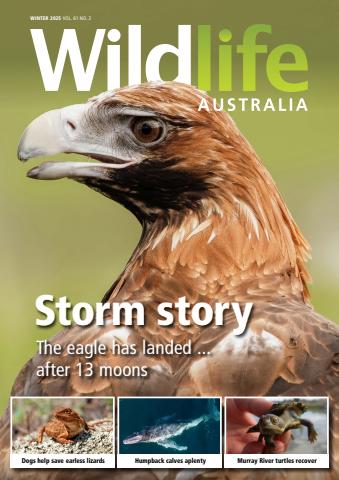
Wildlife Australia

Winter 2025 Conserving the known unknowns THERE ARE examples in this edition of challenges that increasingly face conservationists of the natural world. Let’s call them ‘known unknowns’. Any time humankind expands its footprint – geographically or, increasingly, technologically – there will be some effect on the natural world. That is known. Whether it is positive, or negative, or has no measurable effect, that is unknown. Take Australia’s quest for Net Zero emissions using wind farms in remote areas. From a ‘clean energy’ standpoint, the ‘knowns’ are mostly positive. The bigger and better designed they are, the more electricity they produce reliably – and often after dark when the solar panels are asleep. They are remote from townships, so the whine of blades and turbines does not disturb. This is a known known for the wind generation industry. But it is a ‘known unknown’ for Australia’s ecosystems and wildlife. What is known is that Australian native animals communicate in unique ways – and in unique tones. The low range frequencies, at which koalas and gliders communicate, fall into the spectrum emitted by industrial wind farms. This is an under-researched known unknown. In North Queensland, where these farms are planned for large swathes of koala and glider ridgetop habitats, research shows koalas avoid these wind farm clusters by distances of up to 4km. Wildlife ecologist Roger Martin, who tested these wind farm areas for changes in wildlife behaviour, is calling for a halt to all windfarm construction until the results of this research are written into the terms of Australia’s Environmental Protection and Biodiversity Conservation (EPBC) Act. For the EPBC Act, this is a known unknown that must be updated so wind farms know how to comply. Otherwise the ‘known known’ outcome from such a situation will be like so many others: known negative for wildlife.


FORMAT AUSWÄHLEN:
Sofortiger Zugang

Verfügbare digitale Angebote:

Einzelne digitale Back Issue Winter 2025
 
€4,99 / issue
Diese Ausgabe und andere ältere Ausgaben sind nicht in einem Wildlife Australia Abonnement. Das Abonnement enthält die letzte reguläre Ausgabe und die während des Abonnements erscheinenden neuen Ausgaben und ist bereits ab einem Betrag von €3,75 pro Ausgabe . Wenn Sie ein Abonnement abschließen möchten, sehen Sie sich bitte unsere Abonnement-Optionen
Die Ersparnisse werden auf der Grundlage eines vergleichbaren Kaufs von Einzelausgaben über einen annualisierten Abonnementzeitraum berechnet und können von den angegebenen Beträgen abweichen. Die Berechnungen dienen nur zu Illustrationszwecken. Digitale Abonnements beinhalten die letzte Ausgabe und alle regulären Ausgaben, die während Ihres Abonnements erscheinen, sofern nicht anders angegeben. Das von Ihnen gewählte Abonnement verlängert sich automatisch, wenn es nicht bis zu 24 Stunden vor Ablauf des laufenden Abonnements im Bereich Mein Konto gekündigt wird.

Wildlife Australia issue Winter 2025

Wildlife Australia  |  Winter 2025  


Conserving the known unknowns

THERE ARE examples in this edition of challenges that increasingly face conservationists of the natural world. Let’s call them ‘known unknowns’.

Any time humankind expands its footprint – geographically or, increasingly, technologically – there will be some effect on the natural world. That is known. Whether it is positive, or negative, or has no measurable effect, that is unknown.

Take Australia’s quest for Net Zero emissions using wind farms in remote areas. From a ‘clean energy’ standpoint, the ‘knowns’ are mostly positive. The bigger and better designed they are, the more electricity they produce reliably – and often after dark when the solar panels are asleep.

They are remote from townships, so the whine of blades and turbines does not disturb. This is a known known for the wind generation industry. But it is a ‘known unknown’ for Australia’s ecosystems and wildlife.

What is known is that Australian native animals communicate in unique ways – and in unique tones. The low range frequencies, at which koalas and gliders communicate, fall into the spectrum emitted by industrial wind farms.

This is an under-researched known unknown.
In North Queensland, where these farms are planned for large swathes of koala and glider ridgetop habitats, research shows koalas avoid these wind farm clusters by distances of up to 4km.

Wildlife ecologist Roger Martin, who tested these wind farm areas for changes in wildlife behaviour, is calling for a halt to all windfarm construction until the results of this research are written into the terms of Australia’s Environmental Protection and Biodiversity Conservation (EPBC) Act.

For the EPBC Act, this is a known unknown that must be updated so wind farms know how to comply.

Otherwise the ‘known known’ outcome from such a situation will be like so many others: known negative for wildlife.
mehr lesen weniger lesen
Embrace a wilder life – download Wildlife Australia, the country’s leading nature magazine. Fifty pages of insightful and thought-provoking articles and stunning photographs.
Celebration: Celebrate the essence of Australia – its vast wild landscapes and distinctive wildlife, most found nowhere else in the world
Insights: The articles are written by leading researchers and those whose care for nature comes from deep insights. You won’t find this information by Googling.
Beauty: Immerse yourself in the allure and charm of wildlife with photos by some of Australia’s leading nature photographers.
Understanding: Wildlife Australia is a hub for people who value their relationship with nature and know it is enriched by knowledge. The nature experience can be powerful, but often requires interpretation.
Inspiration: Be inspired by what people are doing to understand and protect nature.
Conservation: Wildlife Australia is a not-for-profit magazine and all profits go to protect nature.

A subscription to Wildlife Australia won't cure arthritis or tonsillitis, but is great for two modern ailments: dislocation from nature and existential malaise. Download the app and see.

Als Abonnent erhalten Sie die folgenden Vorteile:


•  Ein Rabatt auf den UVP Ihrer Zeitschrift
•  Neue Ausgaben werden am Erscheinungstag auf Ihr Gerät geliefert
•  Sie werden keine Ausgabe verpassen
•  Sie sind vor Preiserhöhungen geschützt, die später im Jahr eintreten können

Sie erhalten 4 Ausgaben während eines 1-Jahres Wildlife Australia Zeitschriftenabonnement.

Hinweis: Die digitalen Ausgaben enthalten nicht die in den gedruckten Exemplaren enthaltenen Umschlagseiten oder Beilagen.

Ihr Kauf hier bei Pocketmags.com kann auf jeder der folgenden Plattformen gelesen werden.


Sie können hier auf der Website lesen oder die App für Ihre Plattform herunterladen. Vergessen Sie nicht, sich mit Ihrem Pocketmags-Benutzernamen und Passwort anzumelden.

Apple Pocketmags Online Pocketmags Google Pocketmags
Die Pocketmags-App läuft auf allen iPad- und iPhone-Geräten mit iOS 15.6 oder höher, Android 8.0 oder höher sowie Amazon Fire-Tablets ab dem Jahr 2018. Besitzer älterer Fire-Modelle können jedoch den Amazon Appstore direkt auf ihrem Gerät aufrufen, um die Kompatibilität zu prüfen. Für iOS-Nutzer empfehlen wir die Verwendung eines Geräts, das die neueste iOS-Version ausführen kann, um eine optimale Leistung und Stabilität zu gewährleisten. Ältere Hardware mit geringerer Prozessorleistung und weniger RAM kann aufgrund von Speicherbegrenzungen des Geräts zu einer langsameren Seitenanzeige oder gelegentlichen Stabilitätsproblemen führen. Alternativ funktioniert unser Web-Reader mit jedem modernen, HTML5-kompatiblen Browser, wobei wir für die beste Nutzung auf PC und Mac Chrome oder Firefox empfehlen.
5,0
/5
Basierend auf 5 Kundenrezensionen
5
5
4
0
3
0
2
0
1
0
Rezensionen ansehen

Artikel in dieser Ausgabe


Im Folgenden finden Sie eine Auswahl von Artikeln aus Wildlife Australia Winter 2025.

Free Sample Issue
Testen Sie eine Gratisprobe von Wildlife Australia
Chat
X
Pocketmags Unterstützung