Está atualmente a visualizar o Portugal versão do sítio.
Gostaria de mudar para o seu sítio local?
<  Última edição

Phoenix Digital Bookshop Dassault Rafale Edição anterior

English
0 Comentários   •  English   •   Aviation & Transport (Aviation)
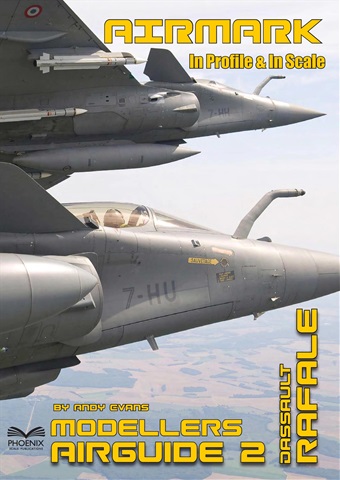
Airmark Airguide #2
Dassault Rafale
By Andy Evans

The Dassault Rafale is a French twin-engine, canard delta wing, multirole fighter aircraft, equipped with a wide range of weapons, the Rafale is intended to perform air supremacy, interdiction, aerial reconnaissance, ground support, in-depth strike, anti-ship strike and nuclear deterrence missions, and is referred to as an ‘omnirole’ aircraft. In the late 1970s, the French Air Force and French Navy were seeking to replace and consolidate their existing fleets of aircraft. In order to reduce development costs and boost prospective sales, France entered into an arrangement with the UK, Germany, Italy and Spain to produce an agile multi-purpose ‘Future European Fighter Aircraft’ (which would become the Eurofighter Typhoon). Subsequent disagreements over workshare and differing requirements led to France's pursuit of its own development programme. Dassault built a technology demonstrator which first flew in July 1986 as part of an eight-year flight-test programme, paving the way for the go-ahead of the project. The Rafale is distinct from other European fighters of its era in that it is almost entirely built by one country, involving most of France's major defence contractors, such as Dassault, Thales and Safran. Many of the aircraft's avionics and features, such as direct voice input, the RBE2 AA active electronically scanned array (AESA) radar and the optronique secteur frontal infra-red search and track (IRST) sensor, were domestically developed and produced for the Rafale programme. Originally scheduled to enter service in 1996, the Rafale suffered significant delays due to post-Cold War budget cuts and changes in priorities. The aircraft is available in three main variants: Rafale C single-seat land-based version, Rafale B twin-seat land-based version, and Rafale M single-seat carrier-based version.
read more read less
Phoenix Digital Bookshop Preview Pages Phoenix Digital Bookshop Preview Pages Phoenix Digital Bookshop Preview Pages Phoenix Digital Bookshop Preview Pages Phoenix Digital Bookshop Preview Pages Phoenix Digital Bookshop Preview Pages

Phoenix Digital Bookshop

Dassault Rafale Airmark Airguide #2 Dassault Rafale By Andy Evans The Dassault Rafale is a French twin-engine, canard delta wing, multirole fighter aircraft, equipped with a wide range of weapons, the Rafale is intended to perform air supremacy, interdiction, aerial reconnaissance, ground support, in-depth strike, anti-ship strike and nuclear deterrence missions, and is referred to as an ‘omnirole’ aircraft. In the late 1970s, the French Air Force and French Navy were seeking to replace and consolidate their existing fleets of aircraft. In order to reduce development costs and boost prospective sales, France entered into an arrangement with the UK, Germany, Italy and Spain to produce an agile multi-purpose ‘Future European Fighter Aircraft’ (which would become the Eurofighter Typhoon). Subsequent disagreements over workshare and differing requirements led to France's pursuit of its own development programme. Dassault built a technology demonstrator which first flew in July 1986 as part of an eight-year flight-test programme, paving the way for the go-ahead of the project. The Rafale is distinct from other European fighters of its era in that it is almost entirely built by one country, involving most of France's major defence contractors, such as Dassault, Thales and Safran. Many of the aircraft's avionics and features, such as direct voice input, the RBE2 AA active electronically scanned array (AESA) radar and the optronique secteur frontal infra-red search and track (IRST) sensor, were domestically developed and produced for the Rafale programme. Originally scheduled to enter service in 1996, the Rafale suffered significant delays due to post-Cold War budget cuts and changes in priorities. The aircraft is available in three main variants: Rafale C single-seat land-based version, Rafale B twin-seat land-based version, and Rafale M single-seat carrier-based version.


SELECCIONAR FORMATO:
Acesso imediato

Ofertas digitais disponíveis:

Edição digital única Dassault Rafale
 
€5,99 / issue
Esta edição e outras edições anteriores não estão incluídas numa Phoenix Digital Bookshop inscrição. As assinaturas incluem a edição regular mais recente e os novos números lançados durante sua assinatura e começam a partir de
As poupanças são calculadas com base na compra comparável de edições únicas durante um período de subscrição anual e podem variar em relação aos montantes anunciados. Os cálculos destinam-se apenas a fins ilustrativos. As assinaturas digitais incluem a última edição e todas as edições regulares lançadas durante a sua assinatura, salvo indicação em contrário. O período escolhido será renovado automaticamente, exceto se for cancelado na área A minha conta até 24 horas antes do fim da assinatura atual.

Phoenix Digital Bookshop issue Dassault Rafale

Phoenix Digital Bookshop  |  Dassault Rafale  


Airmark Airguide #2
Dassault Rafale
By Andy Evans

The Dassault Rafale is a French twin-engine, canard delta wing, multirole fighter aircraft, equipped with a wide range of weapons, the Rafale is intended to perform air supremacy, interdiction, aerial reconnaissance, ground support, in-depth strike, anti-ship strike and nuclear deterrence missions, and is referred to as an ‘omnirole’ aircraft. In the late 1970s, the French Air Force and French Navy were seeking to replace and consolidate their existing fleets of aircraft. In order to reduce development costs and boost prospective sales, France entered into an arrangement with the UK, Germany, Italy and Spain to produce an agile multi-purpose ‘Future European Fighter Aircraft’ (which would become the Eurofighter Typhoon). Subsequent disagreements over workshare and differing requirements led to France's pursuit of its own development programme. Dassault built a technology demonstrator which first flew in July 1986 as part of an eight-year flight-test programme, paving the way for the go-ahead of the project. The Rafale is distinct from other European fighters of its era in that it is almost entirely built by one country, involving most of France's major defence contractors, such as Dassault, Thales and Safran. Many of the aircraft's avionics and features, such as direct voice input, the RBE2 AA active electronically scanned array (AESA) radar and the optronique secteur frontal infra-red search and track (IRST) sensor, were domestically developed and produced for the Rafale programme. Originally scheduled to enter service in 1996, the Rafale suffered significant delays due to post-Cold War budget cuts and changes in priorities. The aircraft is available in three main variants: Rafale C single-seat land-based version, Rafale B twin-seat land-based version, and Rafale M single-seat carrier-based version.
ler mais ler menos

Como subscritor, receberá as seguintes vantagens


•  Um desconto no PVP da sua revista
•  Novas edições entregues no seu dispositivo no dia do lançamento
•  Nunca perderá uma edição
•  Está protegido contra aumentos de preços que possam ocorrer no final do ano

Receberá 1 edições durante um ano Phoenix Digital Bookshop assinatura da revista.

Nota: As edições digitais não incluem os artigos de capa ou os suplementos que se encontram nos exemplares impressos.

Sua compra aqui no Pocketmags.com pode ser lida em qualquer uma das seguintes plataformas.


Pode ler aqui no sítio Web ou descarregar a aplicação para a sua plataforma, mas não se esqueça de iniciar sessão com o seu nome de utilizador e palavra-passe Pocketmags.

Apple Pocketmags Online Pocketmags Google Pocketmags
O aplicativo Pocketmags funciona em todos os dispositivos iPad e iPhone com iOS 15.6 ou superior, Android 8.0 ou superior e tablets Amazon Fire de 2018 em diante, embora os proprietários de modelos Fire anteriores possam verificar a Amazon Appstore diretamente em seus dispositivos para confirmar a compatibilidade. Para usuários de iOS, recomendamos o uso de um dispositivo capaz de executar a versão mais recente do iOS para obter melhor desempenho e estabilidade, pois hardwares mais antigos com menor capacidade de processamento e memória RAM podem apresentar renderização de páginas mais lenta ou problemas ocasionais de estabilidade devido a limitações de memória do dispositivo. Como alternativa, nosso leitor web funciona com qualquer navegador moderno compatível com HTML5, embora recomendemos o Chrome ou o Firefox para a melhor experiência no PC e Mac.
N/A
Com base em 0 Comentários de clientes
5
0
4
0
3
0
2
0
1
0
Ver críticas

Artigos desta edição


Segue-se uma seleção de artigos em Phoenix Digital Bookshop Dassault Rafale.

Conversa
X
Suporte Pocketmags