Vous consultez actuellement le France version du site.
Voulez-vous passer à votre site local ?
<  Dernière édition

Phoenix Digital Bookshop Dassault Rafale Retour à l'édition précédente

English
0 Critiques   •  English   •   Aviation & Transport (Aviation)
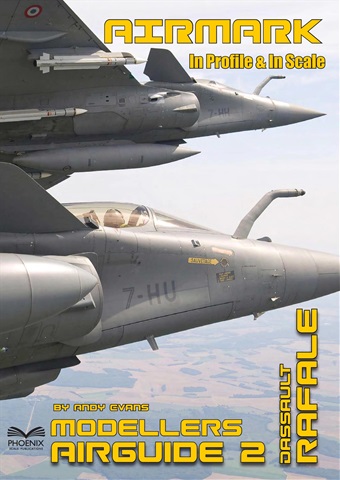
Airmark Airguide #2
Dassault Rafale
By Andy Evans

The Dassault Rafale is a French twin-engine, canard delta wing, multirole fighter aircraft, equipped with a wide range of weapons, the Rafale is intended to perform air supremacy, interdiction, aerial reconnaissance, ground support, in-depth strike, anti-ship strike and nuclear deterrence missions, and is referred to as an ‘omnirole’ aircraft. In the late 1970s, the French Air Force and French Navy were seeking to replace and consolidate their existing fleets of aircraft. In order to reduce development costs and boost prospective sales, France entered into an arrangement with the UK, Germany, Italy and Spain to produce an agile multi-purpose ‘Future European Fighter Aircraft’ (which would become the Eurofighter Typhoon). Subsequent disagreements over workshare and differing requirements led to France's pursuit of its own development programme. Dassault built a technology demonstrator which first flew in July 1986 as part of an eight-year flight-test programme, paving the way for the go-ahead of the project. The Rafale is distinct from other European fighters of its era in that it is almost entirely built by one country, involving most of France's major defence contractors, such as Dassault, Thales and Safran. Many of the aircraft's avionics and features, such as direct voice input, the RBE2 AA active electronically scanned array (AESA) radar and the optronique secteur frontal infra-red search and track (IRST) sensor, were domestically developed and produced for the Rafale programme. Originally scheduled to enter service in 1996, the Rafale suffered significant delays due to post-Cold War budget cuts and changes in priorities. The aircraft is available in three main variants: Rafale C single-seat land-based version, Rafale B twin-seat land-based version, and Rafale M single-seat carrier-based version.
read more read less
Phoenix Digital Bookshop Preview Pages Phoenix Digital Bookshop Preview Pages Phoenix Digital Bookshop Preview Pages Phoenix Digital Bookshop Preview Pages Phoenix Digital Bookshop Preview Pages Phoenix Digital Bookshop Preview Pages

Phoenix Digital Bookshop

Dassault Rafale Airmark Airguide #2 Dassault Rafale By Andy Evans The Dassault Rafale is a French twin-engine, canard delta wing, multirole fighter aircraft, equipped with a wide range of weapons, the Rafale is intended to perform air supremacy, interdiction, aerial reconnaissance, ground support, in-depth strike, anti-ship strike and nuclear deterrence missions, and is referred to as an ‘omnirole’ aircraft. In the late 1970s, the French Air Force and French Navy were seeking to replace and consolidate their existing fleets of aircraft. In order to reduce development costs and boost prospective sales, France entered into an arrangement with the UK, Germany, Italy and Spain to produce an agile multi-purpose ‘Future European Fighter Aircraft’ (which would become the Eurofighter Typhoon). Subsequent disagreements over workshare and differing requirements led to France's pursuit of its own development programme. Dassault built a technology demonstrator which first flew in July 1986 as part of an eight-year flight-test programme, paving the way for the go-ahead of the project. The Rafale is distinct from other European fighters of its era in that it is almost entirely built by one country, involving most of France's major defence contractors, such as Dassault, Thales and Safran. Many of the aircraft's avionics and features, such as direct voice input, the RBE2 AA active electronically scanned array (AESA) radar and the optronique secteur frontal infra-red search and track (IRST) sensor, were domestically developed and produced for the Rafale programme. Originally scheduled to enter service in 1996, the Rafale suffered significant delays due to post-Cold War budget cuts and changes in priorities. The aircraft is available in three main variants: Rafale C single-seat land-based version, Rafale B twin-seat land-based version, and Rafale M single-seat carrier-based version.


SELECTIONNER LE FORMAT :
Accès instantané

Offres numériques disponibles :

Numéro précédent numérique Dassault Rafale
 
€5,99 / issue
Ce numéro et d'autres numéros antérieurs ne sont pas inclus dans un abonnement à l'UE. Phoenix Digital Bookshop abonnement. Les abonnements comprennent le dernier numéro régulier et les nouveaux numéros publiés pendant la durée de l'abonnement.
Les économies sont calculées sur la base d'un achat comparable de numéros uniques sur une période d'abonnement annualisée et peuvent varier par rapport aux montants annoncés. Les calculs sont effectués à des fins d'illustration uniquement. Les abonnements numériques comprennent le dernier numéro et tous les numéros réguliers publiés au cours de l'abonnement, sauf indication contraire. L'abonnement choisi sera automatiquement renouvelé s'il n'est pas résilié dans la section Mon compte jusqu'à 24 heures avant la fin de l'abonnement en cours.

Phoenix Digital Bookshop issue Dassault Rafale

Phoenix Digital Bookshop  |  Dassault Rafale  


Airmark Airguide #2
Dassault Rafale
By Andy Evans

The Dassault Rafale is a French twin-engine, canard delta wing, multirole fighter aircraft, equipped with a wide range of weapons, the Rafale is intended to perform air supremacy, interdiction, aerial reconnaissance, ground support, in-depth strike, anti-ship strike and nuclear deterrence missions, and is referred to as an ‘omnirole’ aircraft. In the late 1970s, the French Air Force and French Navy were seeking to replace and consolidate their existing fleets of aircraft. In order to reduce development costs and boost prospective sales, France entered into an arrangement with the UK, Germany, Italy and Spain to produce an agile multi-purpose ‘Future European Fighter Aircraft’ (which would become the Eurofighter Typhoon). Subsequent disagreements over workshare and differing requirements led to France's pursuit of its own development programme. Dassault built a technology demonstrator which first flew in July 1986 as part of an eight-year flight-test programme, paving the way for the go-ahead of the project. The Rafale is distinct from other European fighters of its era in that it is almost entirely built by one country, involving most of France's major defence contractors, such as Dassault, Thales and Safran. Many of the aircraft's avionics and features, such as direct voice input, the RBE2 AA active electronically scanned array (AESA) radar and the optronique secteur frontal infra-red search and track (IRST) sensor, were domestically developed and produced for the Rafale programme. Originally scheduled to enter service in 1996, the Rafale suffered significant delays due to post-Cold War budget cuts and changes in priorities. The aircraft is available in three main variants: Rafale C single-seat land-based version, Rafale B twin-seat land-based version, and Rafale M single-seat carrier-based version.
en savoir plus lire moins

En tant qu'abonné, vous bénéficierez des avantages suivants :


•  Une réduction sur le prix de vente conseillé de votre magazine
•  Les nouvelles éditions sont livrées sur votre appareil le jour même de leur sortie
•  Vous ne manquerez jamais un numéro
•  Vous êtes protégé contre les hausses de prix qui pourraient survenir plus tard dans l'année.

Vous recevrez 1 pendant une période de 1 an Phoenix Digital Bookshop abonnement au magazine.

Remarque : les éditions numériques ne comprennent pas les éléments de couverture ou les suppléments que vous trouveriez avec les copies imprimées.

Votre achat ici à Pocketmags.com peut être lu sur l'une des plateformes suivantes.


Vous pouvez le lire ici sur le site web ou télécharger l'application pour votre plateforme, n'oubliez pas de vous connecter avec votre nom d'utilisateur et votre mot de passe Pocketmags.

Apple Pocketmags Online Pocketmags Google Pocketmags
L'application Pocketmags fonctionne sur tous les appareils iPad et iPhone équipés d'iOS 15.6 ou version ultérieure, Android 8.0 ou version ultérieure, et sur les tablettes Amazon Fire à partir de 2018. Les propriétaires de modèles Fire plus anciens peuvent toutefois vérifier la compatibilité directement sur l'Amazon Appstore de leur appareil. Pour les utilisateurs d'iOS, nous recommandons d'utiliser un appareil capable de s'exécuter sous la dernière version d'iOS afin de garantir des performances et une stabilité optimales. En effet, les anciens équipements dotés d'une puissance de traitement et d'une mémoire RAM inférieures peuvent présenter des ralentissements lors du chargement des pages ou des problèmes de stabilité occasionnels dus aux limites de mémoire de l'appareil. Alternativement, notre lecteur web fonctionne avec n'importe quel navigateur moderne compatible HTML5, bien que nous recommandions Chrome ou Firefox pour une expérience optimale sur PC et Mac.
N/A
Sur la base de 0 Commentaires des clients
5
0
4
0
3
0
2
0
1
0
Voir les commentaires

Articles dans ce numéro


Vous trouverez ci-dessous une sélection d'articles dans Phoenix Digital Bookshop Dassault Rafale.

Chat
X
Support Pocketmags