Está viendo la página Spain versión del sitio.
Le gustaría cambiar a su sitio local?
<  Última edición

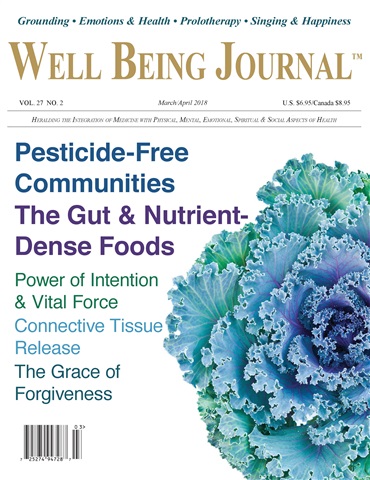
Well Being Journal Magazine Mar/Apr 2018 Edición anterior

English
21 Reseñas   •  English   •   Health & Fitness (Medical)
Only €10,99
When we think of pollution, toxic chemicals introduced into the environment by human activities come to mind. Agricultural pesticides and herbicides—which, along with other industrial chemicals, permeate groundwater and are flushed into streams and rivers, impacting lakes, oceans, and their inhabitants—are a major concern. Vandana Shiva writes about solutions in her article “Creating Pesticide- and Herbicide-Free Communities.” The subject of thought pollution is also entering the collective consciousness. Thoughts can be likened to frequencies, such as those used by radio stations. These frequencies travel unseen through our environment every minute. A lower or higher radio frequency can be received by adjusting a radio’s tuner. In a similar manner, thoughts are received by the brain. Who determines the station, or frequency, we tune in to? A thought of compassion tunes us in to harmonious feelings and to everything on that “station”: love, unity, understanding, patience, strength, courage, and peace. There is much compassion in the collective thought environment after people are injured in a national or local disaster. Judgmental thoughts, such as those of bigotry, bring instead feelings of separation, irritation, and fear. They affect the frequencies of collective thought in regions subjected to intolerance, violence, crime, or war. In such areas, there can be less openness to cultural differences and to change. It’s important to remember that we have the ability to shift these frequencies. Lynne McTaggert writes of the power of eight. Her research shows that when large group meditations for peace are held, crime in the area decreases. Forgiveness can be a challenge when we are faced with politicians who seem incapable of telling the truth, corporate “leaders” who are more concerned with profit than public health, and people who objectify one another.
read more read less
Well Being Journal Preview Pages Well Being Journal Preview Pages Well Being Journal Preview Pages Well Being Journal Preview Pages Well Being Journal Preview Pages Well Being Journal Preview Pages Well Being Journal Preview Pages

Well Being Journal

Mar/Apr 2018 When we think of pollution, toxic chemicals introduced into the environment by human activities come to mind. Agricultural pesticides and herbicides—which, along with other industrial chemicals, permeate groundwater and are flushed into streams and rivers, impacting lakes, oceans, and their inhabitants—are a major concern. Vandana Shiva writes about solutions in her article “Creating Pesticide- and Herbicide-Free Communities.” The subject of thought pollution is also entering the collective consciousness. Thoughts can be likened to frequencies, such as those used by radio stations. These frequencies travel unseen through our environment every minute. A lower or higher radio frequency can be received by adjusting a radio’s tuner. In a similar manner, thoughts are received by the brain. Who determines the station, or frequency, we tune in to? A thought of compassion tunes us in to harmonious feelings and to everything on that “station”: love, unity, understanding, patience, strength, courage, and peace. There is much compassion in the collective thought environment after people are injured in a national or local disaster. Judgmental thoughts, such as those of bigotry, bring instead feelings of separation, irritation, and fear. They affect the frequencies of collective thought in regions subjected to intolerance, violence, crime, or war. In such areas, there can be less openness to cultural differences and to change. It’s important to remember that we have the ability to shift these frequencies. Lynne McTaggert writes of the power of eight. Her research shows that when large group meditations for peace are held, crime in the area decreases. Forgiveness can be a challenge when we are faced with politicians who seem incapable of telling the truth, corporate “leaders” who are more concerned with profit than public health, and people who objectify one another.


SELECCIONAR FORMATO:
Acceso instantáneo

Ofertas digitales disponibles:

Ejemplar digital único Mar/Apr 2018
 
€10,99 / issue
Este número y otros números atrasados no se incluyen en un Well Being Journal suscripción. Las suscripciones incluyen el último número de la revista y los nuevos números publicados durante el periodo de suscripción. €6,33 por número . Si desea suscribirse, consulte nuestro Opciones de suscripción
Los ahorros se calculan sobre la compra comparable de números sueltos durante un periodo de suscripción anualizado y pueden variar respecto a los importes anunciados. Los cálculos son meramente ilustrativos. Las suscripciones digitales incluyen el último número y todos los números regulares publicados durante su suscripción, a menos que se indique lo contrario. El periodo elegido se renovará automáticamente a menos que se cancele en el área Mi cuenta hasta 24 horas antes del final de la suscripción actual.

Well Being Journal issue Mar/Apr 2018

Well Being Journal  |  Mar/Apr 2018  


When we think of pollution, toxic chemicals introduced into the environment by human activities come to mind. Agricultural pesticides and herbicides—which, along with other industrial chemicals, permeate groundwater and are flushed into streams and rivers, impacting lakes, oceans, and their inhabitants—are a major concern. Vandana Shiva writes about solutions in her article “Creating Pesticide- and Herbicide-Free Communities.” The subject of thought pollution is also entering the collective consciousness. Thoughts can be likened to frequencies, such as those used by radio stations. These frequencies travel unseen through our environment every minute. A lower or higher radio frequency can be received by adjusting a radio’s tuner. In a similar manner, thoughts are received by the brain. Who determines the station, or frequency, we tune in to? A thought of compassion tunes us in to harmonious feelings and to everything on that “station”: love, unity, understanding, patience, strength, courage, and peace. There is much compassion in the collective thought environment after people are injured in a national or local disaster. Judgmental thoughts, such as those of bigotry, bring instead feelings of separation, irritation, and fear. They affect the frequencies of collective thought in regions subjected to intolerance, violence, crime, or war. In such areas, there can be less openness to cultural differences and to change. It’s important to remember that we have the ability to shift these frequencies. Lynne McTaggert writes of the power of eight. Her research shows that when large group meditations for peace are held, crime in the area decreases. Forgiveness can be a challenge when we are faced with politicians who seem incapable of telling the truth, corporate “leaders” who are more concerned with profit than public health, and people who objectify one another.
Seguir leyendo leer menos
Well Being Journal is dedicated to publishing cogent, concise, expert information about natural ways to prevent and heal illnesses and reverse aging. We herald the integration of medicine with physical, mental, emotional, spiritual and social aspects of health. We publish well substantiated feature articles and research notes covering those subjects as well as personal stories of healing—and we’ve been doing so for 20 years!
The Journal also publishes research as well as personal and clinical experiences about the nutritional and natural healing and prevention of illnesses, including arthritis, cancer, cardiovascular or heart disease, diabetes, Lyme disease, Alzheimer’s/dementia and much more. Regarded as a treasure trove by subscribers, the Journal, with 52 pages each issue, provides healthy, fascinating reading cover-to-cover.
Be forewarned! By reading the Journal you might just live with greater health and happiness. Perhaps you will enjoy giving the Journal a try. Our $1.99 app includes one complimentary issue of the Journal. It’s our truly genuine hope that you might just delightfully discover reading the Journal will help you live a healthier, happier, longer life!

omo abonado recibirá las siguientes ventajas:


•  Un descuento sobre el PVP de su revista
•  Las nuevas ediciones se envían a tu dispositivo el día de su lanzamiento
•  Nunca te perderás un número
•  Estás protegido de las subidas de precios que puedan producirse más adelante en el año

Recibirás 6 problemas durante un año Well Being Journal suscripción a la revista.

Nota: Las ediciones digitales no incluyen los artículos de portada ni los suplementos que encontraría en los ejemplares impresos.

Su compra aquí en Pocketmags.com puede leerse en cualquiera de las siguientes plataformas.


Puedes leer aquí en el sitio web o descargar la aplicación para tu plataforma, sólo recuerda iniciar sesión con tu nombre de usuario y contraseña de Pocketmags.

Apple Pocketmags Online Pocketmags Google Pocketmags
La aplicación Pocketmags funciona en todos los dispositivos iPad y iPhone con iOS 15.6 o superior, Android 8.0 o superior y tabletas Amazon Fire de 2018 en adelante, aunque los propietarios de modelos Fire anteriores pueden consultar la Amazon Appstore directamente en su dispositivo para confirmar la compatibilidad. Para los usuarios de iOS, recomendamos utilizar un dispositivo capaz de ejecutar la última versión de iOS para un rendimiento y estabilidad óptimos, ya que el hardware más antiguo con menor potencia de procesamiento y memoria RAM puede experimentar una renderización de páginas más lenta o problemas ocasionales de estabilidad debido a las limitaciones de memoria del dispositivo. Alternativamente, nuestro lector web funciona con cualquier navegador moderno compatible con HTML5, aunque recomendamos Chrome o Firefox para disfrutar de la mejor experiencia en PC y Mac.
4,8
/5
Basado en 21 Opiniones de los clientes
5
17
4
4
3
0
2
0
1
0
Ver comentarios

Always a good read

Excellent to ensure that all leaders have good well-being Revisado 19 abril 2022

Great read

Great for mindfulness and wellbeing for all members of the family of all generations Revisado 09 abril 2022

Natural Ways to Heal and Stay Healthy

Natural Ways to Heal and Stay Healthy Revisado 25 febrero 2021

Well Being Journal

Easy to read and informative articles. Revisado 02 mayo 2020

Fabulous - very informative and interesting. It makes you think about prescribe medications and the effect on our health. Recommend to anyone. Revisado 28 junio 2012

Artículos de este número


A continuación encontrará una selección de artículos en Well Being Journal Mar/Apr 2018.

March/April 2026 issue March/April 2026 March/April 2026 Comprar por €10,99 Ver | Añadir a la cesta
Jan/Feb 2026 issue Jan/Feb 2026 Jan/Feb 2026 Comprar por €10,99 Ver | Añadir a la cesta
Nov./Dec. 2025 issue Nov./Dec. 2025 Nov./Dec. 2025 Comprar por €10,99 Ver | Añadir a la cesta
Sept./Oct. 2025 issue Sept./Oct. 2025 Sept./Oct. 2025 Comprar por €10,99 Ver | Añadir a la cesta
July/August 2025 issue July/August 2025 July/August 2025 Comprar por €10,99 Ver | Añadir a la cesta
May/June 2025 issue May/June 2025 May/June 2025 Comprar por €10,99 Ver | Añadir a la cesta
March/April 2025 issue March/April 2025 March/April 2025 Comprar por €10,99 Ver | Añadir a la cesta
Jan/Feb 2025 issue Jan/Feb 2025 Jan/Feb 2025 Comprar por €10,99 Ver | Añadir a la cesta
Fall 2024 issue Fall 2024 Fall 2024 Comprar por €10,99 Ver | Añadir a la cesta
Summer 2024 issue Summer 2024 Summer 2024 Comprar por €10,99 Ver | Añadir a la cesta
Spring 2024 issue Spring 2024 Spring 2024 Comprar por €10,99 Ver | Añadir a la cesta
Winter 2024 issue Winter 2024 Winter 2024 Comprar por €10,99 Ver | Añadir a la cesta
Fall 2023 issue Fall 2023 Fall 2023 Comprar por €10,99 Ver | Añadir a la cesta
+
Ver todos
Chat
X
Soporte Pocketmags