New Eastern Europe | Sep-Oct 2019
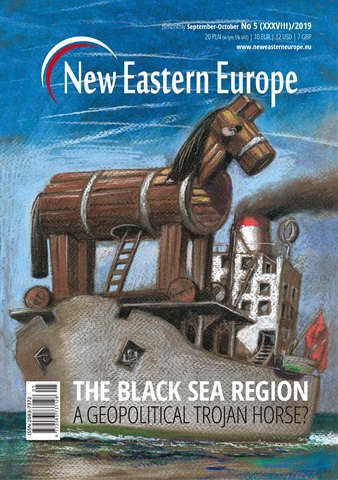
Since the fall of the Soviet Union and the end of the Cold War, the Black Sea has turned into a region which became one of the centres of geopolitical competition between the East and West. Major world powers including Russia, Turkey, the European Union and NATO have a stake here; while other regional players like Ukraine and Georgia are directly affected by their actions. This was the case in August 2008 when Russia attacked Georgia in the Five Day War or in March 2014 when, in the aftermath of the EuroMaidan Revolution in Kyiv, the Crimean peninsula was annexed by the Russian Federation. Keeping these two events in mind, it is suffice to say that the region of the Black Sea is a geopolitical Trojan horse.
We have edited this issue in co-operation with the Polish Embassy in Tbilisi (which is currently serving as the NATO contact point), inviting authors from the region to provide you with various dimensions of the Black Sea states from such perspectives as security, culture, geopolitics, economics and geo-strategy.
Our authors illustrate the growing interdependencies that are emerging in the region. Their analyses help us imagine how future developments that may take place here will largely depend on wider international factors. And these developments include, as many of our authors warn, cost of western inaction. It is our aim that with the publication of these texts, we can help raise awareness of the situation and sentiments surrounding the Black Sea region.
ler mais
ler menos
Como subscritor, receberá as seguintes vantagens
• Um desconto no PVP da sua revista
• Novas edições entregues no seu dispositivo no dia do lançamento
• Nunca perderá uma edição
• Está protegido contra aumentos de preços que possam ocorrer no final do ano
Receberá 5 edições durante um ano New Eastern Europe assinatura da revista.
Nota: As edições digitais não incluem os artigos de capa ou os suplementos que se encontram nos exemplares impressos.
Artigos desta edição
Segue-se uma seleção de artigos em New Eastern Europe Sep-Oct 2019.