U bekijkt momenteel de Netherlands versie van de site.
Wilt u overschakelen naar uw lokale site?
Laatste editie


Free Sample Issue
Probeer een Gratis monster van Wildlife Australia
Probeer een Gratis monster

Wildlife Australia Magazine Spring 2025 Volume 62 Number 3 Vorige editie

English
5 Beoordelingen   •  English   •   Leisure Interest (Wildlife)
Only €4,99
FIRST WORD

How to handle SA’s deadly marine algal bloom

THE SOUTH AUSTRALIAN foreshore—about 500km of it—as fallen foul of a toxic and deadly algal bloom brought on by one of the many marine waters heatwaves circulating around Australia.

The Great Barrier Reef has again been impacted by widespread coral bleaching. Coral bleaching on the Western Australian reefs—ranging from Pilbara to Ningaloo—may be worse in its long-term impact, according to scientific observers.

But the algal bloom foreshore ‘invasion’ of SA is of a severity and scale that puts it on a new level of impact. People can see the devastating effects for themselves at their local beaches and favourite fishing spots.

More than 450 marine species have been washed up on SA coastlines, with over 14,000 observations recorded by citizen scientists. Underwater there are vast seascapes of dead and dying sea creatures.

The Biodiversity Council has succinctly described the event as, “man-made, inevitable, and likely to recur regularly without major action”.

The council’s expert group said the impacts would be far-reaching, and the bloom itself is just one consequence of the marine heatwaves ringing the country.

The Biodiversity Council said, “This event was foreseeable and even predicted … It is a human-mediated disaster—enabled by an extended marine heatwave, likely fed by a large pulse of nutrient-rich floodwater and coastal upwelling, and exacerbated by widespread loss of marine ecosystems that once provided natural water filtering and resilience against natural as well as human threats.”

The algal bloom is already being described by the Biodiversity Council as the marine equivalent of the Black Summer Bushfires, from which $200 million was allocated to wildlife recovery action. Does the algal bloom require similar support?

Read about plans to mitigate such an algal bloom happening again in this edition.
read more read less
Wildlife Australia Preview Pages Wildlife Australia Preview Pages Wildlife Australia Preview Pages Wildlife Australia Preview Pages Wildlife Australia Preview Pages Wildlife Australia Preview Pages Wildlife Australia Preview Pages Wildlife Australia Preview Pages

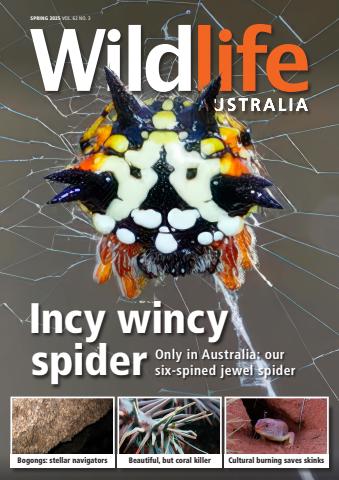
Wildlife Australia

Spring 2025 Volume 62 Number 3 FIRST WORD How to handle SA’s deadly marine algal bloom THE SOUTH AUSTRALIAN foreshore—about 500km of it—as fallen foul of a toxic and deadly algal bloom brought on by one of the many marine waters heatwaves circulating around Australia. The Great Barrier Reef has again been impacted by widespread coral bleaching. Coral bleaching on the Western Australian reefs—ranging from Pilbara to Ningaloo—may be worse in its long-term impact, according to scientific observers. But the algal bloom foreshore ‘invasion’ of SA is of a severity and scale that puts it on a new level of impact. People can see the devastating effects for themselves at their local beaches and favourite fishing spots. More than 450 marine species have been washed up on SA coastlines, with over 14,000 observations recorded by citizen scientists. Underwater there are vast seascapes of dead and dying sea creatures. The Biodiversity Council has succinctly described the event as, “man-made, inevitable, and likely to recur regularly without major action”. The council’s expert group said the impacts would be far-reaching, and the bloom itself is just one consequence of the marine heatwaves ringing the country. The Biodiversity Council said, “This event was foreseeable and even predicted … It is a human-mediated disaster—enabled by an extended marine heatwave, likely fed by a large pulse of nutrient-rich floodwater and coastal upwelling, and exacerbated by widespread loss of marine ecosystems that once provided natural water filtering and resilience against natural as well as human threats.” The algal bloom is already being described by the Biodiversity Council as the marine equivalent of the Black Summer Bushfires, from which $200 million was allocated to wildlife recovery action. Does the algal bloom require similar support? Read about plans to mitigate such an algal bloom happening again in this edition.


FORMAAT SELECTEREN:
Directe toegang

Beschikbare digitale aanbiedingen:

Enkele digitale uitgave Spring 2025 Volume 62 Number 3
 
4,99 / issue
Deze editie en andere oude edities zijn niet opgenomen in een Wildlife Australia abonnement. Abonnementen omvatten de nieuwste reguliere editie en nieuwe uitgaven die tijdens uw abonnement zijn uitgebracht en beginnen vanaf slechts €3,75 per uitgave . Als je je wilt abonneren, kijk dan op onze Abonnementsopties
Besparingen zijn berekend op de vergelijkbare aankoop van losse nummers over een abonnementsperiode op jaarbasis en kunnen afwijken van geadverteerde bedragen. Berekeningen dienen alleen ter illustratie. Digitale abonnementen omvatten het laatste nummer en alle reguliere nummers die tijdens uw abonnement verschijnen, tenzij anders vermeld. De door u gekozen termijn wordt automatisch verlengd, tenzij u tot 24 uur voor het einde van het lopende abonnement opzegt in de Mijn Account-zone.

Wildlife Australia issue Spring 2025 Volume 62 Number 3

Wildlife Australia  |  Spring 2025 Volume 62 Number 3  


FIRST WORD

How to handle SA’s deadly marine algal bloom

THE SOUTH AUSTRALIAN foreshore—about 500km of it—as fallen foul of a toxic and deadly algal bloom brought on by one of the many marine waters heatwaves circulating around Australia.

The Great Barrier Reef has again been impacted by widespread coral bleaching. Coral bleaching on the Western Australian reefs—ranging from Pilbara to Ningaloo—may be worse in its long-term impact, according to scientific observers.

But the algal bloom foreshore ‘invasion’ of SA is of a severity and scale that puts it on a new level of impact. People can see the devastating effects for themselves at their local beaches and favourite fishing spots.

More than 450 marine species have been washed up on SA coastlines, with over 14,000 observations recorded by citizen scientists. Underwater there are vast seascapes of dead and dying sea creatures.

The Biodiversity Council has succinctly described the event as, “man-made, inevitable, and likely to recur regularly without major action”.

The council’s expert group said the impacts would be far-reaching, and the bloom itself is just one consequence of the marine heatwaves ringing the country.

The Biodiversity Council said, “This event was foreseeable and even predicted … It is a human-mediated disaster—enabled by an extended marine heatwave, likely fed by a large pulse of nutrient-rich floodwater and coastal upwelling, and exacerbated by widespread loss of marine ecosystems that once provided natural water filtering and resilience against natural as well as human threats.”

The algal bloom is already being described by the Biodiversity Council as the marine equivalent of the Black Summer Bushfires, from which $200 million was allocated to wildlife recovery action. Does the algal bloom require similar support?

Read about plans to mitigate such an algal bloom happening again in this edition.
meer lezen minder lezen
Embrace a wilder life – download Wildlife Australia, the country’s leading nature magazine. Fifty pages of insightful and thought-provoking articles and stunning photographs.
Celebration: Celebrate the essence of Australia – its vast wild landscapes and distinctive wildlife, most found nowhere else in the world
Insights: The articles are written by leading researchers and those whose care for nature comes from deep insights. You won’t find this information by Googling.
Beauty: Immerse yourself in the allure and charm of wildlife with photos by some of Australia’s leading nature photographers.
Understanding: Wildlife Australia is a hub for people who value their relationship with nature and know it is enriched by knowledge. The nature experience can be powerful, but often requires interpretation.
Inspiration: Be inspired by what people are doing to understand and protect nature.
Conservation: Wildlife Australia is a not-for-profit magazine and all profits go to protect nature.

A subscription to Wildlife Australia won't cure arthritis or tonsillitis, but is great for two modern ailments: dislocation from nature and existential malaise. Download the app and see.

Als abonnee ontvang je de volgende voordelen:


•  Een korting op de verkoopprijs van je tijdschrift
•  Je tijdschrift elke maand op je apparaat
•  Je zult nooit een editie missen
•  Je bent beschermd tegen prijsstijgingen die later in het jaar kunnen plaatsvinden

Je ontvangt 4 edities gedurende een periode van 1 jaar Wildlife Australia abonnement op een tijdschrift.

Opmerking: Digitale edities bevatten niet de omslagitems of supplementen die je zou vinden bij gedrukte exemplaren.

Uw aankoop hier op Pocketmags.com kan op elk van de volgende platforms worden gelezen.


Je kunt hier lezen op de website of de app downloaden voor jouw platform, vergeet niet in te loggen met je Pocketmags gebruikersnaam en wachtwoord.

Apple Pocketmags Online Pocketmags Google Pocketmags
De Pocketmags-app werkt op alle iPad- en iPhone-apparaten met iOS 15.6 of hoger, Android 8.0 o hoger, en Amazon Fire-tablets vanaf 2018, hoewel eigenaren van oudere Fire-modellen de Amazon Appstore rechtstreeks op hun apparaat kunnen controleren om de compatibiliteit te bevestigen. Voor iOS-gebruikers raden we aan een apparaat te gebruiken dat de nieuwste versie van iOS kan draaien voor optimale prestaties en stabiliteit, aangezien oudere hardware met minder processorkracht en RAM-geheugen een tragere paginaweergave of incidentele stabiliteitsproblemen kan ervaren als gevolg van geheugenbeperkingen van het apparaat. Als alternatief werkt onze web-reader met elke moderne, HTML5-compatibele browser, hoewel we Chrome of Firefox aanbevelen voor de beste ervaring op pc en Mac.
5,0
/5
Gebaseerd op 5 Beoordelingen van klanten
5
5
4
0
3
0
2
0
1
0
Bekijk beoordelingen

Artikelen in deze editie


Hieronder vindt u een selectie van artikelen in Wildlife Australia Spring 2025 Volume 62 Number 3.

Free Sample Issue
Probeer een Gratis monster van Wildlife Australia
Chat
X
Pocketmags ondersteuning