U bekijkt momenteel de Netherlands versie van de site.
Wilt u overschakelen naar uw lokale site?
<  Laatste editie

New Eastern Europe Magazine Sept-Oct 2018 Vorige editie

English
7 Beoordelingen   •  English   •   General Interest (History & Knowledge)
Only €5,99
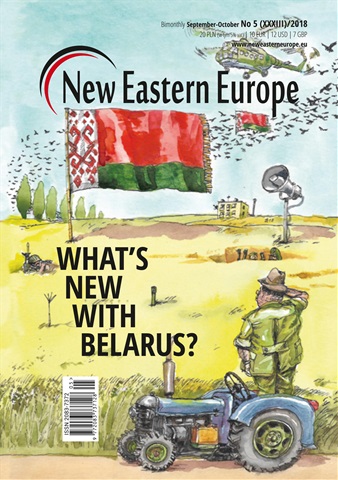
It often seems, at least from the outside, that Belarus remains isolated from the West and very static in its transformation. Yet, despite its relative isolation, Belarus is indeed changing – as our authors argue in this issue. Even if these changes are slow, as Andrew Wilson notes in the opening essay, they should be seen as an opportunity for European policymakers who nevertheless need to remain “realistic as where exactly the changes are occurring and why”. Carnegie expert Balázs Jarábik agrees that current changes are important, but far from a breakthrough. However, he notes that no other country in the Eastern Partnership is as stable as Belarus – even if it is one of the least democratic, as noted by both Maxim Rust and Alyaksandr Klaskouski in their analyses of the country’s unique political system.
Yet, to really get a grasp of how this post-Soviet country is evolving, one must look beyond politics. Hence, our authors take us on a journey to other, less-explored areas of the country. Victor Martinovich describes the many layers of Belarusian culture, Tania Setsko illustrates the role of exclusion in the society, while Natalia Smolentceva and Varvara Morozova describe grassroots urban movements in and around the capital city of Minsk. When put together, we get a picture of a country that is rather dynamic and faces similar issues to many other countries in the region and the West. On the surface, Belarus may be an even more reluctant participant of Europe, but it is also much more than the simple catchphrase “Europe’s last dictatorship”.
read more read less
New Eastern Europe Preview Pages New Eastern Europe Preview Pages New Eastern Europe Preview Pages New Eastern Europe Preview Pages New Eastern Europe Preview Pages New Eastern Europe Preview Pages New Eastern Europe Preview Pages New Eastern Europe Preview Pages

New Eastern Europe

Sept-Oct 2018 It often seems, at least from the outside, that Belarus remains isolated from the West and very static in its transformation. Yet, despite its relative isolation, Belarus is indeed changing – as our authors argue in this issue. Even if these changes are slow, as Andrew Wilson notes in the opening essay, they should be seen as an opportunity for European policymakers who nevertheless need to remain “realistic as where exactly the changes are occurring and why”. Carnegie expert Balázs Jarábik agrees that current changes are important, but far from a breakthrough. However, he notes that no other country in the Eastern Partnership is as stable as Belarus – even if it is one of the least democratic, as noted by both Maxim Rust and Alyaksandr Klaskouski in their analyses of the country’s unique political system. Yet, to really get a grasp of how this post-Soviet country is evolving, one must look beyond politics. Hence, our authors take us on a journey to other, less-explored areas of the country. Victor Martinovich describes the many layers of Belarusian culture, Tania Setsko illustrates the role of exclusion in the society, while Natalia Smolentceva and Varvara Morozova describe grassroots urban movements in and around the capital city of Minsk. When put together, we get a picture of a country that is rather dynamic and faces similar issues to many other countries in the region and the West. On the surface, Belarus may be an even more reluctant participant of Europe, but it is also much more than the simple catchphrase “Europe’s last dictatorship”.


FORMAAT SELECTEREN:
Directe toegang

Beschikbare digitale aanbiedingen:

Enkele digitale uitgave Sept-Oct 2018
 
€5,99 / issue
Deze editie en andere oude edities zijn niet opgenomen in een New Eastern Europe abonnement. Abonnementen omvatten de nieuwste reguliere editie en nieuwe uitgaven die tijdens uw abonnement zijn uitgebracht en beginnen vanaf slechts €4,00 per uitgave . Als je je wilt abonneren, kijk dan op onze Abonnementsopties
Besparingen zijn berekend op de vergelijkbare aankoop van losse nummers over een abonnementsperiode op jaarbasis en kunnen afwijken van geadverteerde bedragen. Berekeningen dienen alleen ter illustratie. Digitale abonnementen omvatten het laatste nummer en alle reguliere nummers die tijdens uw abonnement verschijnen, tenzij anders vermeld. De door u gekozen termijn wordt automatisch verlengd, tenzij u tot 24 uur voor het einde van het lopende abonnement opzegt in de Mijn Account-zone.

New Eastern Europe issue Sept-Oct 2018

New Eastern Europe  |  Sept-Oct 2018  


It often seems, at least from the outside, that Belarus remains isolated from the West and very static in its transformation. Yet, despite its relative isolation, Belarus is indeed changing – as our authors argue in this issue. Even if these changes are slow, as Andrew Wilson notes in the opening essay, they should be seen as an opportunity for European policymakers who nevertheless need to remain “realistic as where exactly the changes are occurring and why”. Carnegie expert Balázs Jarábik agrees that current changes are important, but far from a breakthrough. However, he notes that no other country in the Eastern Partnership is as stable as Belarus – even if it is one of the least democratic, as noted by both Maxim Rust and Alyaksandr Klaskouski in their analyses of the country’s unique political system.
Yet, to really get a grasp of how this post-Soviet country is evolving, one must look beyond politics. Hence, our authors take us on a journey to other, less-explored areas of the country. Victor Martinovich describes the many layers of Belarusian culture, Tania Setsko illustrates the role of exclusion in the society, while Natalia Smolentceva and Varvara Morozova describe grassroots urban movements in and around the capital city of Minsk. When put together, we get a picture of a country that is rather dynamic and faces similar issues to many other countries in the region and the West. On the surface, Belarus may be an even more reluctant participant of Europe, but it is also much more than the simple catchphrase “Europe’s last dictatorship”.
meer lezen minder lezen
Trying to understand what is Vladimir Putin’s next move? Want to know more about the crisis in Ukraine? Looking for historical and cultural figures that shape Eastern Europe? Then look no further. Put New Eastern Europe on your reading list by downloading the New Eastern Europe App and gain access to the most important issues facing our region today.

New Eastern Europe is the exclusive English language bimonthly news magazine dedicated to Central and Eastern European affairs. The magazine provides readers with commentary on current events, political analysis, cultural and historical discussions as well as books and film reviews.

Als abonnee ontvang je de volgende voordelen:


•  Een korting op de verkoopprijs van je tijdschrift
•  Je tijdschrift elke maand op je apparaat
•  Je zult nooit een editie missen
•  Je bent beschermd tegen prijsstijgingen die later in het jaar kunnen plaatsvinden

Je ontvangt 5 edities gedurende een periode van 1 jaar New Eastern Europe abonnement op een tijdschrift.

Opmerking: Digitale edities bevatten niet de omslagitems of supplementen die je zou vinden bij gedrukte exemplaren.

Uw aankoop hier op Pocketmags.com kan op elk van de volgende platforms worden gelezen.


Je kunt hier lezen op de website of de app downloaden voor jouw platform, vergeet niet in te loggen met je Pocketmags gebruikersnaam en wachtwoord.

Apple Pocketmags Online Pocketmags Google Pocketmags
De Pocketmags-app werkt op alle iPad- en iPhone-apparaten met iOS 15.6 of hoger, Android 8.0 o hoger, en Amazon Fire-tablets vanaf 2018, hoewel eigenaren van oudere Fire-modellen de Amazon Appstore rechtstreeks op hun apparaat kunnen controleren om de compatibiliteit te bevestigen. Voor iOS-gebruikers raden we aan een apparaat te gebruiken dat de nieuwste versie van iOS kan draaien voor optimale prestaties en stabiliteit, aangezien oudere hardware met minder processorkracht en RAM-geheugen een tragere paginaweergave of incidentele stabiliteitsproblemen kan ervaren als gevolg van geheugenbeperkingen van het apparaat. Als alternatief werkt onze web-reader met elke moderne, HTML5-compatibele browser, hoewel we Chrome of Firefox aanbevelen voor de beste ervaring op pc en Mac.
4,4
/5
Gebaseerd op 7 Beoordelingen van klanten
5
5
4
1
3
0
2
1
1
0
Bekijk beoordelingen

New Eastern Europe

As a former Foreign Affairs Officer to the Hungarian Military and someone extremely interested in events happening in Eastern Europe I love this magazine and it's associated podcast. Beoordeeld op 23 april 2020

New Eastern Europe Looked Through Cold War Eyes

New Eastern Europe Looked Through Cold War Eyes - There is nothing new or objective in this magazine, it Russiaphobia on steroids. Rather than embrace the new opportunities for trade and culture between Eastern European nations, Russia included, it looks at how to paint everything in terms of opportunities for destabilising relations between Russia and her immediate neighbours. It's everything that is wrong with "Western" thinking at this time, which is progressively becoming more Fascist towards anything that does not conform to its "world view" and business interests. Beoordeeld op 29 oktober 2018

Artikelen in deze editie


Hieronder vindt u een selectie van artikelen in New Eastern Europe Sept-Oct 2018.

Chat
X
Pocketmags ondersteuning