IT
  
Attualmente si sta visualizzando la versione Italy del sito.
Volete passare al vostro sito locale?
<  Ultima edizione


Free Sample Issue
Provate un campione gratuito di Practical Reptile Keeping
Provate un campione gratuito di

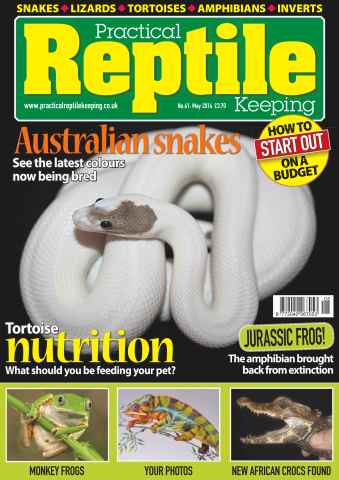
Practical Reptile Keeping Magazine No.61 Australian snakes Edizione posteriore

English
22 Recensioni   •  English   •   Family & Home (Animals & Pets)
Only €4,99
With so much concern about chytrid fungus, and its deadly eff ects on many amphibian populations, it is great to be able to report that at least one species may have cheated extinction, and could be on the verge of a truly remarkable comeback. In anticipation of such events, there’s now even a term that has been coined by scientists for bringing extinct species back to life – it’s called de-extinction.
The onset of spring here in the UK means that Mediterranean-type tortoises are now out of hibernation and hopefully enjoying the increasingly warm and hopefully sunny days that lie ahead. We have therefore decided to tackle one of the most controversial issues surrounding their care in this issue. What should they be fed to keep them healthy, and are formulated tortoise foods bad for them? As in all things, it turns out that variety is the spice of life, and signifi cantly, not all prepared foods are the same.
Diet is something that can be a pitfall for many lizard keepers too, with nutritional problems topping the list of reasons that owners take their pets to the vet, based on the experience of specialist vet and reptile keeper Sean McCormack. What many breeders may not have considered, though, is how easy it is to end up inadvertently acquiring and pairing related animals together. Sean reveals how this state of aff airs can arise.
Keeping reptiles has become a global hobby, and it was was fascinating to hear recently from Chris Williams of Australia’s Snake Ranch, which is one of the major breeding operations, particularly of snakes, in that part of the world. As you can see from his article in this issue, there are some remarkable morphs now being created out there.
When I visited Australia for the fi rst time in the 1980s, no-one kept reptiles, and yet now, larger herp events there can draw approaching 5,000 visitors, prepared to travel huge distances to meet fellow enthusiasts and see the latest developments in the hobby. This can only be good, encouraging peop
read more read less
Practical Reptile Keeping Preview Pages Practical Reptile Keeping Preview Pages Practical Reptile Keeping Preview Pages Practical Reptile Keeping Preview Pages Practical Reptile Keeping Preview Pages Practical Reptile Keeping Preview Pages Practical Reptile Keeping Preview Pages Practical Reptile Keeping Preview Pages

Practical Reptile Keeping

No.61 Australian snakes With so much concern about chytrid fungus, and its deadly eff ects on many amphibian populations, it is great to be able to report that at least one species may have cheated extinction, and could be on the verge of a truly remarkable comeback. In anticipation of such events, there’s now even a term that has been coined by scientists for bringing extinct species back to life – it’s called de-extinction. The onset of spring here in the UK means that Mediterranean-type tortoises are now out of hibernation and hopefully enjoying the increasingly warm and hopefully sunny days that lie ahead. We have therefore decided to tackle one of the most controversial issues surrounding their care in this issue. What should they be fed to keep them healthy, and are formulated tortoise foods bad for them? As in all things, it turns out that variety is the spice of life, and signifi cantly, not all prepared foods are the same. Diet is something that can be a pitfall for many lizard keepers too, with nutritional problems topping the list of reasons that owners take their pets to the vet, based on the experience of specialist vet and reptile keeper Sean McCormack. What many breeders may not have considered, though, is how easy it is to end up inadvertently acquiring and pairing related animals together. Sean reveals how this state of aff airs can arise. Keeping reptiles has become a global hobby, and it was was fascinating to hear recently from Chris Williams of Australia’s Snake Ranch, which is one of the major breeding operations, particularly of snakes, in that part of the world. As you can see from his article in this issue, there are some remarkable morphs now being created out there. When I visited Australia for the fi rst time in the 1980s, no-one kept reptiles, and yet now, larger herp events there can draw approaching 5,000 visitors, prepared to travel huge distances to meet fellow enthusiasts and see the latest developments in the hobby. This can only be good, encouraging peop


SELEZIONARE IL FORMATO:
Accesso immediato

Offerte digitali disponibili:

Singolo numero arretrato digitale No.61 Australian snakes
 
€4,99 / issue
Questo numero e gli altri numeri arretrati non sono inclusi in un Practical Reptile Keeping abbonamento. Gli abbonamenti includono l'ultimo numero regolare e i nuovi numeri usciti durante l'abbonamento e partono da un prezzo minimo di €3,33 per numero . Se volete abbonarvi, date un'occhiata al nostro sito web Opzioni di abbonamento
I risparmi sono calcolati sull'acquisto comparabile di singoli numeri su un periodo di abbonamento annualizzato e possono variare rispetto agli importi pubblicizzati. I calcoli sono solo a scopo illustrativo. Gli abbonamenti digitali includono l'ultimo numero e tutti i numeri regolari pubblicati durante l'abbonamento, se non diversamente indicato. L'abbonamento scelto si rinnoverà automaticamente a meno che non venga annullato nell'area Il mio account fino a 24 ore prima della scadenza dell'abbonamento in corso.

Practical Reptile Keeping issue No.61 Australian snakes

Practical Reptile Keeping  |  No.61 Australian snakes  


With so much concern about chytrid fungus, and its deadly eff ects on many amphibian populations, it is great to be able to report that at least one species may have cheated extinction, and could be on the verge of a truly remarkable comeback. In anticipation of such events, there’s now even a term that has been coined by scientists for bringing extinct species back to life – it’s called de-extinction.
The onset of spring here in the UK means that Mediterranean-type tortoises are now out of hibernation and hopefully enjoying the increasingly warm and hopefully sunny days that lie ahead. We have therefore decided to tackle one of the most controversial issues surrounding their care in this issue. What should they be fed to keep them healthy, and are formulated tortoise foods bad for them? As in all things, it turns out that variety is the spice of life, and signifi cantly, not all prepared foods are the same.
Diet is something that can be a pitfall for many lizard keepers too, with nutritional problems topping the list of reasons that owners take their pets to the vet, based on the experience of specialist vet and reptile keeper Sean McCormack. What many breeders may not have considered, though, is how easy it is to end up inadvertently acquiring and pairing related animals together. Sean reveals how this state of aff airs can arise.
Keeping reptiles has become a global hobby, and it was was fascinating to hear recently from Chris Williams of Australia’s Snake Ranch, which is one of the major breeding operations, particularly of snakes, in that part of the world. As you can see from his article in this issue, there are some remarkable morphs now being created out there.
When I visited Australia for the fi rst time in the 1980s, no-one kept reptiles, and yet now, larger herp events there can draw approaching 5,000 visitors, prepared to travel huge distances to meet fellow enthusiasts and see the latest developments in the hobby. This can only be good, encouraging peop
Per saperne di più leggere di meno
Practical Reptile Keeping will give you a magazine packed with snakes, lizards, tortoises, amphibians and bugs. As well as stunning photographs, each issue will feature technical help, product information and health care advice to keep your pet in tip top condition plus new developments in the reptile world, breeder updates and vet's casebook and much more.

Come abbonati riceverete i seguenti vantaggi:


•  Uno sconto sul prezzo di vendita della rivista
•  Nuove edizioni consegnate sul tuo dispositivo il giorno stesso dell'uscita
•  Non perderete mai un numero
•  Siete protetti dagli aumenti di prezzo che potrebbero verificarsi nel corso dell'anno

Riceverete 12 edizioni durante un periodo di 1 anno Practical Reptile Keeping abbonamento alla rivista.

Nota: le edizioni digitali non includono gli articoli di copertina o i supplementi che si trovano nelle copie stampate.

Il vostro acquisto su Pocketmags.com può essere letto su una delle seguenti piattaforme.


Potete leggere qui sul sito web o scaricare l'applicazione per la vostra piattaforma, ricordandovi di effettuare il login con il vostro nome utente e la vostra password Pocketmags.

Apple Pocketmags Online Pocketmags Google Pocketmags
L'app Pocketmags funziona su tutti i dispositivi iPad e iPhone con iOS 15.6 o versioni successive, Android 8.0 o versioni successive e sui tablet Amazon Fire dal 2018 in poi, anche se i possessori di modelli Fire precedenti possono controllare l'Amazon Appstore direttamente sul proprio dispositivo per confermare la compatibilità. Per gli utenti iOS, consigliamo di utilizzare un dispositivo in grado di eseguire l'ultima versione di iOS per ottenere prestazioni e stabilità ottimali, poiché l'hardware più datato con minore potenza di elaborazione e RAM potrebbe risentire di un caricamento delle pagine più lento o di occasionali problemi di stabilità dovuti ai limiti di memoria del dispositivo. In alternativa, il nostro lettore web funziona con qualsiasi browser moderno compatibile con HTML5, anche se consigliamo Chrome o Firefox per un'esperienza ottimale su PC e Mac.
4,3
/5
Basato su 22 Recensioni dei clienti
5
13
4
4
3
4
2
1
1
0
Visualizza le recensioni

Reptile Keeping Made Easy

My son loves this and it's enabled him to grow his reptile collection. Recensito 15 aprile 2019

Articoli in questo numero


Di seguito una selezione di articoli in Practical Reptile Keeping No.61 Australian snakes.

August 2026 issue August 2026 August 2026 Acquista per €4,99 Vista | Al carrello
July 2026 issue July 2026 July 2026 Acquista per €4,99 Vista | Al carrello
June 2026 issue June 2026 June 2026 Acquista per €4,99 Vista | Al carrello
May 2026 issue May 2026 May 2026 Acquista per €4,99 Vista | Al carrello
April 2026 issue April 2026 April 2026 Acquista per €4,99 Vista | Al carrello
March 2026 issue March 2026 March 2026 Acquista per €4,99 Vista | Al carrello
February 2026 issue February 2026 February 2026 Acquista per €4,99 Vista | Al carrello
January 2026 issue January 2026 January 2026 Acquista per €4,99 Vista | Al carrello
December 2025 issue December 2025 December 2025 Acquista per €4,99 Vista | Al carrello
November 2025 issue November 2025 November 2025 Acquista per €4,99 Vista | Al carrello
October 2025 issue October 2025 October 2025 Acquista per €4,99 Vista | Al carrello
September 2025 issue September 2025 September 2025 Acquista per €4,99 Vista | Al carrello
August 2025 issue August 2025 August 2025 Acquista per €4,99 Vista | Al carrello
+
Vedi tutti
Free Sample Issue
Provate un campione gratuito di Practical Reptile Keeping
Chat
X
Supporto Pocketmags