Vous consultez actuellement le France version du site.
Voulez-vous passer à votre site local ?
<  Dernière édition

New Eastern Europe Magazine May-Aug 2019 Retour à l'édition précédente

English
7 Critiques   •  English   •   General Interest (History & Knowledge)
Only €5,99
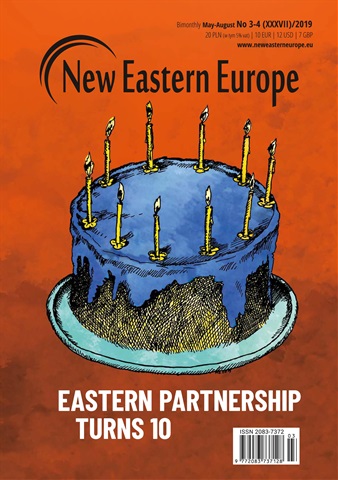
Preparing a special issue on such a technical issue as the Eastern Partnership is always a challenge from the editorial point of view. The European Union’s policy towards the East is one that is never easily explained nor well understood among Europeans and their Eastern neighbours alike. As James Nixey points out in his essay, less than one per cent of Europeans has ever even heard of it. Certainly readers of this magazine have a good sense of what the Eastern Partnership is and how much has it changed (or not) in this region since it was launched in 2009. And that is why the milestone of the Eastern Partnership turning ten should be an opportunity to not only celebrate but also reflect on what has been achieved and how this policy can be shaped for the future. As you will read in the following pages, our authors have very different views of the Eastern Partnership. Arguably, however, they all agree that there is still plenty of work to do if the Eastern Partnership is to truly transform Eastern Europe.
Another transformative event that we are recognising in this issue is the 30-year anniversary of the fall of communism in Central Europe, specifically in Poland, Czechoslovakia, Hungary, Romania, Bulgaria and East Germany. Our authors look at whether the promises of the transformation have been fulfilled for the societies that dreamed of a new future, what the memory of the year 1989 means today and, in some ways, why it generates social divisions. We recognise that these two anniversaries – together with the anniversaries of NATO and EU membership, 15 and 20 respectively – are a part of the wider context of a changing Europe in a changing world.
In the end, these anniversaries encourage us to look back and answer the question as to what have we learnt over these last 10, 20 or 30 years and how these lessons can help us shape this region by not repeating the same mistakes in order to deliver a better future for the next generation.
read more read less
New Eastern Europe Preview Pages New Eastern Europe Preview Pages New Eastern Europe Preview Pages New Eastern Europe Preview Pages New Eastern Europe Preview Pages New Eastern Europe Preview Pages New Eastern Europe Preview Pages New Eastern Europe Preview Pages

New Eastern Europe

May-Aug 2019 Preparing a special issue on such a technical issue as the Eastern Partnership is always a challenge from the editorial point of view. The European Union’s policy towards the East is one that is never easily explained nor well understood among Europeans and their Eastern neighbours alike. As James Nixey points out in his essay, less than one per cent of Europeans has ever even heard of it. Certainly readers of this magazine have a good sense of what the Eastern Partnership is and how much has it changed (or not) in this region since it was launched in 2009. And that is why the milestone of the Eastern Partnership turning ten should be an opportunity to not only celebrate but also reflect on what has been achieved and how this policy can be shaped for the future. As you will read in the following pages, our authors have very different views of the Eastern Partnership. Arguably, however, they all agree that there is still plenty of work to do if the Eastern Partnership is to truly transform Eastern Europe. Another transformative event that we are recognising in this issue is the 30-year anniversary of the fall of communism in Central Europe, specifically in Poland, Czechoslovakia, Hungary, Romania, Bulgaria and East Germany. Our authors look at whether the promises of the transformation have been fulfilled for the societies that dreamed of a new future, what the memory of the year 1989 means today and, in some ways, why it generates social divisions. We recognise that these two anniversaries – together with the anniversaries of NATO and EU membership, 15 and 20 respectively – are a part of the wider context of a changing Europe in a changing world. In the end, these anniversaries encourage us to look back and answer the question as to what have we learnt over these last 10, 20 or 30 years and how these lessons can help us shape this region by not repeating the same mistakes in order to deliver a better future for the next generation.


SELECTIONNER LE FORMAT :
Accès instantané

Offres numériques disponibles :

Numéro précédent numérique May-Aug 2019
 
€5,99 / issue
Ce numéro et d'autres numéros antérieurs ne sont pas inclus dans un abonnement à l'UE. New Eastern Europe abonnement. Les abonnements comprennent le dernier numéro régulier et les nouveaux numéros publiés pendant la durée de l'abonnement. €4,00 par numéro . Si vous souhaitez vous abonner, veuillez consulter notre rubrique Options d'abonnement
Les économies sont calculées sur la base d'un achat comparable de numéros uniques sur une période d'abonnement annualisée et peuvent varier par rapport aux montants annoncés. Les calculs sont effectués à des fins d'illustration uniquement. Les abonnements numériques comprennent le dernier numéro et tous les numéros réguliers publiés au cours de l'abonnement, sauf indication contraire. L'abonnement choisi sera automatiquement renouvelé s'il n'est pas résilié dans la section Mon compte jusqu'à 24 heures avant la fin de l'abonnement en cours.

New Eastern Europe issue May-Aug 2019

New Eastern Europe  |  May-Aug 2019  


Preparing a special issue on such a technical issue as the Eastern Partnership is always a challenge from the editorial point of view. The European Union’s policy towards the East is one that is never easily explained nor well understood among Europeans and their Eastern neighbours alike. As James Nixey points out in his essay, less than one per cent of Europeans has ever even heard of it. Certainly readers of this magazine have a good sense of what the Eastern Partnership is and how much has it changed (or not) in this region since it was launched in 2009. And that is why the milestone of the Eastern Partnership turning ten should be an opportunity to not only celebrate but also reflect on what has been achieved and how this policy can be shaped for the future. As you will read in the following pages, our authors have very different views of the Eastern Partnership. Arguably, however, they all agree that there is still plenty of work to do if the Eastern Partnership is to truly transform Eastern Europe.
Another transformative event that we are recognising in this issue is the 30-year anniversary of the fall of communism in Central Europe, specifically in Poland, Czechoslovakia, Hungary, Romania, Bulgaria and East Germany. Our authors look at whether the promises of the transformation have been fulfilled for the societies that dreamed of a new future, what the memory of the year 1989 means today and, in some ways, why it generates social divisions. We recognise that these two anniversaries – together with the anniversaries of NATO and EU membership, 15 and 20 respectively – are a part of the wider context of a changing Europe in a changing world.
In the end, these anniversaries encourage us to look back and answer the question as to what have we learnt over these last 10, 20 or 30 years and how these lessons can help us shape this region by not repeating the same mistakes in order to deliver a better future for the next generation.
en savoir plus lire moins
Trying to understand what is Vladimir Putin’s next move? Want to know more about the crisis in Ukraine? Looking for historical and cultural figures that shape Eastern Europe? Then look no further. Put New Eastern Europe on your reading list by downloading the New Eastern Europe App and gain access to the most important issues facing our region today.

New Eastern Europe is the exclusive English language bimonthly news magazine dedicated to Central and Eastern European affairs. The magazine provides readers with commentary on current events, political analysis, cultural and historical discussions as well as books and film reviews.

En tant qu'abonné, vous bénéficierez des avantages suivants :


•  Une réduction sur le prix de vente conseillé de votre magazine
•  Les nouvelles éditions sont livrées sur votre appareil le jour même de leur sortie
•  Vous ne manquerez jamais un numéro
•  Vous êtes protégé contre les hausses de prix qui pourraient survenir plus tard dans l'année.

Vous recevrez 5 pendant une période de 1 an New Eastern Europe abonnement au magazine.

Remarque : les éditions numériques ne comprennent pas les éléments de couverture ou les suppléments que vous trouveriez avec les copies imprimées.

Votre achat ici à Pocketmags.com peut être lu sur l'une des plateformes suivantes.


Vous pouvez le lire ici sur le site web ou télécharger l'application pour votre plateforme, n'oubliez pas de vous connecter avec votre nom d'utilisateur et votre mot de passe Pocketmags.

Apple Pocketmags Online Pocketmags Google Pocketmags
L'application Pocketmags fonctionne sur tous les appareils iPad et iPhone équipés d'iOS 15.6 ou version ultérieure, Android 8.0 ou version ultérieure, et sur les tablettes Amazon Fire à partir de 2018. Les propriétaires de modèles Fire plus anciens peuvent toutefois vérifier la compatibilité directement sur l'Amazon Appstore de leur appareil. Pour les utilisateurs d'iOS, nous recommandons d'utiliser un appareil capable de s'exécuter sous la dernière version d'iOS afin de garantir des performances et une stabilité optimales. En effet, les anciens équipements dotés d'une puissance de traitement et d'une mémoire RAM inférieures peuvent présenter des ralentissements lors du chargement des pages ou des problèmes de stabilité occasionnels dus aux limites de mémoire de l'appareil. Alternativement, notre lecteur web fonctionne avec n'importe quel navigateur moderne compatible HTML5, bien que nous recommandions Chrome ou Firefox pour une expérience optimale sur PC et Mac.
4,4
/5
Sur la base de 7 Commentaires des clients
5
5
4
1
3
0
2
1
1
0
Voir les commentaires

New Eastern Europe

As a former Foreign Affairs Officer to the Hungarian Military and someone extremely interested in events happening in Eastern Europe I love this magazine and it's associated podcast. Révision 23 avril 2020

New Eastern Europe Looked Through Cold War Eyes

New Eastern Europe Looked Through Cold War Eyes - There is nothing new or objective in this magazine, it Russiaphobia on steroids. Rather than embrace the new opportunities for trade and culture between Eastern European nations, Russia included, it looks at how to paint everything in terms of opportunities for destabilising relations between Russia and her immediate neighbours. It's everything that is wrong with "Western" thinking at this time, which is progressively becoming more Fascist towards anything that does not conform to its "world view" and business interests. Révision 29 octobre 2018

Articles dans ce numéro


Vous trouverez ci-dessous une sélection d'articles dans New Eastern Europe May-Aug 2019.

Chat
X
Support Pocketmags