Está viendo la página Spain versión del sitio.
Le gustaría cambiar a su sitio local?
<  Última edición

New Eastern Europe Magazine Issue 2 (VII) - 2013 Edición anterior

English
7 Reseñas   •  English   •   General Interest (History & Knowledge)
Only €5,99
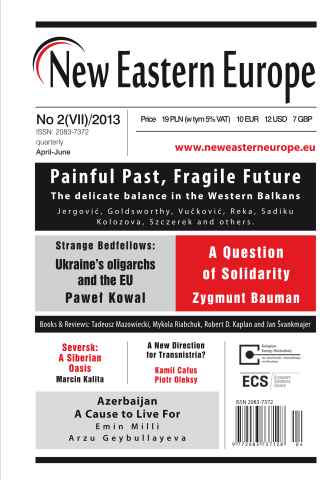
The spring 2013 issue of New Eastern Europe includes a special coverage of a complex region marred by a painful past but facing a hopeful, yet fragile future – the Western Balkans. The feature includes acclaimed Bosnian writer, Miljenko Jergović, who analyses Croatia’s entry into the European Union by comparing the countries of the region to a bazaar, claiming that his fellow countrymen have “behaved like utter fraudsters in the way they have sold Europe falsely-declared goods”.

Polish journalist Ziemowit Szczerek draws attention to the remaining conflict-prone areas and shows that borders still matter – even on a continent that is so proud of having broken them. Skopje-based Artan Sadiku and Katerina Kolozova show their city as divided to the point of being schizophrenic. While Blerim Reka, former Macedonian Ambassador to the EU, argues for a new approach in the region by opening up the borders and creating a Balkan Benelux. Other articles in the issue explore the promises and challenges of Serbia’s new government, the slow process of reconciliation in Bosnia and Herzegovina, and Yugo-nostalgia, a phenomenon of longing for the old system.

In addition to the feature on the Balkans, the issue also includes an essay by philosopher and sociologist, Zygmunt Bauman – who asks whether the idea of Solidarity, so important in the 20th century, is relevant today? While Paweł Kowal, a member of the European Parliament, argues that it is high time to consider a way to work with Ukraine’s oligarchs instead of disregarding them as part of the problem.

Lastly, this issue gives an insightful look at Azerbaijan with an interview with opposition writers Arzu Geybullayeva and Emin Milli as well as a discussion on Azeri-Iranian.

The issue closes with reviews of books from the region, along with a special review of a recent exhibit of Czech surrealist Jan Švankmajer.
read more read less
New Eastern Europe Preview Pages New Eastern Europe Preview Pages New Eastern Europe Preview Pages New Eastern Europe Preview Pages New Eastern Europe Preview Pages New Eastern Europe Preview Pages New Eastern Europe Preview Pages New Eastern Europe Preview Pages

New Eastern Europe

Issue 2 (VII) - 2013 The spring 2013 issue of New Eastern Europe includes a special coverage of a complex region marred by a painful past but facing a hopeful, yet fragile future – the Western Balkans. The feature includes acclaimed Bosnian writer, Miljenko Jergović, who analyses Croatia’s entry into the European Union by comparing the countries of the region to a bazaar, claiming that his fellow countrymen have “behaved like utter fraudsters in the way they have sold Europe falsely-declared goods”. Polish journalist Ziemowit Szczerek draws attention to the remaining conflict-prone areas and shows that borders still matter – even on a continent that is so proud of having broken them. Skopje-based Artan Sadiku and Katerina Kolozova show their city as divided to the point of being schizophrenic. While Blerim Reka, former Macedonian Ambassador to the EU, argues for a new approach in the region by opening up the borders and creating a Balkan Benelux. Other articles in the issue explore the promises and challenges of Serbia’s new government, the slow process of reconciliation in Bosnia and Herzegovina, and Yugo-nostalgia, a phenomenon of longing for the old system. In addition to the feature on the Balkans, the issue also includes an essay by philosopher and sociologist, Zygmunt Bauman – who asks whether the idea of Solidarity, so important in the 20th century, is relevant today? While Paweł Kowal, a member of the European Parliament, argues that it is high time to consider a way to work with Ukraine’s oligarchs instead of disregarding them as part of the problem. Lastly, this issue gives an insightful look at Azerbaijan with an interview with opposition writers Arzu Geybullayeva and Emin Milli as well as a discussion on Azeri-Iranian. The issue closes with reviews of books from the region, along with a special review of a recent exhibit of Czech surrealist Jan Švankmajer.


SELECCIONAR FORMATO:
Acceso instantáneo

Ofertas digitales disponibles:

Ejemplar digital único Issue 2 (VII) - 2013
 
€5,99 / issue
Este número y otros números atrasados no se incluyen en un New Eastern Europe suscripción. Las suscripciones incluyen el último número de la revista y los nuevos números publicados durante el periodo de suscripción. €4,00 por número . Si desea suscribirse, consulte nuestro Opciones de suscripción
Los ahorros se calculan sobre la compra comparable de números sueltos durante un periodo de suscripción anualizado y pueden variar respecto a los importes anunciados. Los cálculos son meramente ilustrativos. Las suscripciones digitales incluyen el último número y todos los números regulares publicados durante su suscripción, a menos que se indique lo contrario. El periodo elegido se renovará automáticamente a menos que se cancele en el área Mi cuenta hasta 24 horas antes del final de la suscripción actual.

New Eastern Europe issue Issue 2 (VII) - 2013

New Eastern Europe  |  Issue 2 (VII) - 2013  


The spring 2013 issue of New Eastern Europe includes a special coverage of a complex region marred by a painful past but facing a hopeful, yet fragile future – the Western Balkans. The feature includes acclaimed Bosnian writer, Miljenko Jergović, who analyses Croatia’s entry into the European Union by comparing the countries of the region to a bazaar, claiming that his fellow countrymen have “behaved like utter fraudsters in the way they have sold Europe falsely-declared goods”.

Polish journalist Ziemowit Szczerek draws attention to the remaining conflict-prone areas and shows that borders still matter – even on a continent that is so proud of having broken them. Skopje-based Artan Sadiku and Katerina Kolozova show their city as divided to the point of being schizophrenic. While Blerim Reka, former Macedonian Ambassador to the EU, argues for a new approach in the region by opening up the borders and creating a Balkan Benelux. Other articles in the issue explore the promises and challenges of Serbia’s new government, the slow process of reconciliation in Bosnia and Herzegovina, and Yugo-nostalgia, a phenomenon of longing for the old system.

In addition to the feature on the Balkans, the issue also includes an essay by philosopher and sociologist, Zygmunt Bauman – who asks whether the idea of Solidarity, so important in the 20th century, is relevant today? While Paweł Kowal, a member of the European Parliament, argues that it is high time to consider a way to work with Ukraine’s oligarchs instead of disregarding them as part of the problem.

Lastly, this issue gives an insightful look at Azerbaijan with an interview with opposition writers Arzu Geybullayeva and Emin Milli as well as a discussion on Azeri-Iranian.

The issue closes with reviews of books from the region, along with a special review of a recent exhibit of Czech surrealist Jan Švankmajer.
Seguir leyendo leer menos
Trying to understand what is Vladimir Putin’s next move? Want to know more about the crisis in Ukraine? Looking for historical and cultural figures that shape Eastern Europe? Then look no further. Put New Eastern Europe on your reading list by downloading the New Eastern Europe App and gain access to the most important issues facing our region today.

New Eastern Europe is the exclusive English language bimonthly news magazine dedicated to Central and Eastern European affairs. The magazine provides readers with commentary on current events, political analysis, cultural and historical discussions as well as books and film reviews.

omo abonado recibirá las siguientes ventajas:


•  Un descuento sobre el PVP de su revista
•  Las nuevas ediciones se envían a tu dispositivo el día de su lanzamiento
•  Nunca te perderás un número
•  Estás protegido de las subidas de precios que puedan producirse más adelante en el año

Recibirás 5 problemas durante un año New Eastern Europe suscripción a la revista.

Nota: Las ediciones digitales no incluyen los artículos de portada ni los suplementos que encontraría en los ejemplares impresos.

Su compra aquí en Pocketmags.com puede leerse en cualquiera de las siguientes plataformas.


Puedes leer aquí en el sitio web o descargar la aplicación para tu plataforma, sólo recuerda iniciar sesión con tu nombre de usuario y contraseña de Pocketmags.

Apple Pocketmags Online Pocketmags Google Pocketmags
La aplicación Pocketmags funciona en todos los dispositivos iPad y iPhone con iOS 15.6 o superior, Android 8.0 o superior y tabletas Amazon Fire de 2018 en adelante, aunque los propietarios de modelos Fire anteriores pueden consultar la Amazon Appstore directamente en su dispositivo para confirmar la compatibilidad. Para los usuarios de iOS, recomendamos utilizar un dispositivo capaz de ejecutar la última versión de iOS para un rendimiento y estabilidad óptimos, ya que el hardware más antiguo con menor potencia de procesamiento y memoria RAM puede experimentar una renderización de páginas más lenta o problemas ocasionales de estabilidad debido a las limitaciones de memoria del dispositivo. Alternativamente, nuestro lector web funciona con cualquier navegador moderno compatible con HTML5, aunque recomendamos Chrome o Firefox para disfrutar de la mejor experiencia en PC y Mac.
4,4
/5
Basado en 7 Opiniones de los clientes
5
5
4
1
3
0
2
1
1
0
Ver comentarios

New Eastern Europe

As a former Foreign Affairs Officer to the Hungarian Military and someone extremely interested in events happening in Eastern Europe I love this magazine and it's associated podcast. Revisado 23 abril 2020

New Eastern Europe Looked Through Cold War Eyes

New Eastern Europe Looked Through Cold War Eyes - There is nothing new or objective in this magazine, it Russiaphobia on steroids. Rather than embrace the new opportunities for trade and culture between Eastern European nations, Russia included, it looks at how to paint everything in terms of opportunities for destabilising relations between Russia and her immediate neighbours. It's everything that is wrong with "Western" thinking at this time, which is progressively becoming more Fascist towards anything that does not conform to its "world view" and business interests. Revisado 29 octubre 2018

Artículos de este número


A continuación encontrará una selección de artículos en New Eastern Europe Issue 2 (VII) - 2013.

Chat
X
Soporte Pocketmags