Sie sehen gerade die Germany Version der Website.
Möchten Sie zu Ihrer lokalen Seite wechseln?
Neueste Ausgabe


Free Sample Issue
Testen Sie eine Gratisprobe von Railway Digest
Testen Sie eine Gratisprobe von

Railway Digest Magazine April 2019 Zurück Ausgabe

English
22 Bewertungen   •  English   •   Aviation & Transport (Rail)
Only €7,99
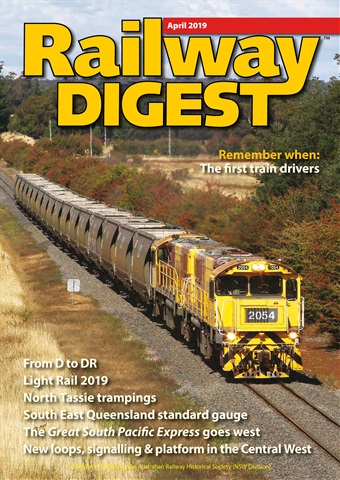
Central West NSW: New loops, signalling and platform
In recent years a resurgence in intrastate freight business, especially port-related container services and additional passenger services, has led to an increase in rail activity on the NSW Western Line. As John Hoyle reports, this has led to the installation of loops at Rydal and Georges Plains, and follow-on signals at Wimbledon. Another change to Central West NSW rail infrastructure is the provision of a new platform at Millthorpe, located between Blayney and Orange, and soon to benefit from an additional daily passenger service.

From D to DR
Phil Melling gives us a brief, well-illustrated history of two interesting locomotives that were originally built for the Western Australian Government Railways, later rebuilt in New Zealand for use in Tasmania, then finally returned to Western Australia.

Brisbane to the Border: South East Queensland standard gauge
The 111-kilometre standard-gauge line in southeast Queensland, lying between Brisbane and the Queensland/NSW border, has never been high on the list for railfans. Compared to its southern states counterparts, it carries fewer trains, has less motive power variety, fewer operators and the majority of traffic runs after dark. However, as Mike Martin explains, the last 25 years have seen a number of developments on this stretch of track that merit attention.

North Tassie trampings
In February this year, Malcolm Holdsworth decided it was time to check out some of TasRail’s interesting regular operations in the scenic surrounds of northern Tasmania, including the Railton-Burnie cement shuttle, the Fingal coalie, the Melba line ore trains and No.31 Paper Train.

The first train drivers
Greta Britain was the home of the steam-powered railway, and in the early days the enginemen – many of whom operated as contractors – had a tough, unrelenting job to do. Former driver and union representative, Frank J Hussey takes a look at those ‘good old days’!
read more read less
Railway Digest Preview Pages Railway Digest Preview Pages Railway Digest Preview Pages Railway Digest Preview Pages Railway Digest Preview Pages Railway Digest Preview Pages Railway Digest Preview Pages

Railway Digest

April 2019 Central West NSW: New loops, signalling and platform In recent years a resurgence in intrastate freight business, especially port-related container services and additional passenger services, has led to an increase in rail activity on the NSW Western Line. As John Hoyle reports, this has led to the installation of loops at Rydal and Georges Plains, and follow-on signals at Wimbledon. Another change to Central West NSW rail infrastructure is the provision of a new platform at Millthorpe, located between Blayney and Orange, and soon to benefit from an additional daily passenger service. From D to DR Phil Melling gives us a brief, well-illustrated history of two interesting locomotives that were originally built for the Western Australian Government Railways, later rebuilt in New Zealand for use in Tasmania, then finally returned to Western Australia. Brisbane to the Border: South East Queensland standard gauge The 111-kilometre standard-gauge line in southeast Queensland, lying between Brisbane and the Queensland/NSW border, has never been high on the list for railfans. Compared to its southern states counterparts, it carries fewer trains, has less motive power variety, fewer operators and the majority of traffic runs after dark. However, as Mike Martin explains, the last 25 years have seen a number of developments on this stretch of track that merit attention. North Tassie trampings In February this year, Malcolm Holdsworth decided it was time to check out some of TasRail’s interesting regular operations in the scenic surrounds of northern Tasmania, including the Railton-Burnie cement shuttle, the Fingal coalie, the Melba line ore trains and No.31 Paper Train. The first train drivers Greta Britain was the home of the steam-powered railway, and in the early days the enginemen – many of whom operated as contractors – had a tough, unrelenting job to do. Former driver and union representative, Frank J Hussey takes a look at those ‘good old days’!


FORMAT AUSWÄHLEN:
Sofortiger Zugang

Verfügbare digitale Angebote:

Einzelne digitale Back Issue April 2019
SPEZIALANGEBOT: War €7,99
 
1,19 / Ausgabe
Diese Ausgabe und andere ältere Ausgaben sind nicht in einem Railway Digest Abonnement. Das Abonnement enthält die letzte reguläre Ausgabe und die während des Abonnements erscheinenden neuen Ausgaben und ist bereits ab einem Betrag von €7,92 pro Ausgabe . Wenn Sie ein Abonnement abschließen möchten, sehen Sie sich bitte unsere Abonnement-Optionen
Die Ersparnisse werden auf der Grundlage eines vergleichbaren Kaufs von Einzelausgaben über einen annualisierten Abonnementzeitraum berechnet und können von den angegebenen Beträgen abweichen. Die Berechnungen dienen nur zu Illustrationszwecken. Digitale Abonnements beinhalten die letzte Ausgabe und alle regulären Ausgaben, die während Ihres Abonnements erscheinen, sofern nicht anders angegeben. Das von Ihnen gewählte Abonnement verlängert sich automatisch, wenn es nicht bis zu 24 Stunden vor Ablauf des laufenden Abonnements im Bereich Mein Konto gekündigt wird.

Railway Digest issue April 2019

Railway Digest  |  April 2019  


Central West NSW: New loops, signalling and platform
In recent years a resurgence in intrastate freight business, especially port-related container services and additional passenger services, has led to an increase in rail activity on the NSW Western Line. As John Hoyle reports, this has led to the installation of loops at Rydal and Georges Plains, and follow-on signals at Wimbledon. Another change to Central West NSW rail infrastructure is the provision of a new platform at Millthorpe, located between Blayney and Orange, and soon to benefit from an additional daily passenger service.

From D to DR
Phil Melling gives us a brief, well-illustrated history of two interesting locomotives that were originally built for the Western Australian Government Railways, later rebuilt in New Zealand for use in Tasmania, then finally returned to Western Australia.

Brisbane to the Border: South East Queensland standard gauge
The 111-kilometre standard-gauge line in southeast Queensland, lying between Brisbane and the Queensland/NSW border, has never been high on the list for railfans. Compared to its southern states counterparts, it carries fewer trains, has less motive power variety, fewer operators and the majority of traffic runs after dark. However, as Mike Martin explains, the last 25 years have seen a number of developments on this stretch of track that merit attention.

North Tassie trampings
In February this year, Malcolm Holdsworth decided it was time to check out some of TasRail’s interesting regular operations in the scenic surrounds of northern Tasmania, including the Railton-Burnie cement shuttle, the Fingal coalie, the Melba line ore trains and No.31 Paper Train.

The first train drivers
Greta Britain was the home of the steam-powered railway, and in the early days the enginemen – many of whom operated as contractors – had a tough, unrelenting job to do. Former driver and union representative, Frank J Hussey takes a look at those ‘good old days’!
mehr lesen weniger lesen
Railway Digest brings you the very latest in railway news. Published every month since 1963, each exciting issue of Railway Digest contains:

• News
• Full length articles on current topics
• Historical and operations information from all of Australia’s railways
• Photographs from Australia’s leading rail photographers

If you are a railway enthusiast then this is the magazine for you. Download your copy now.

Als Abonnent erhalten Sie die folgenden Vorteile:


•  Ein Rabatt auf den UVP Ihrer Zeitschrift
•  Neue Ausgaben werden am Erscheinungstag auf Ihr Gerät geliefert
•  Sie werden keine Ausgabe verpassen
•  Sie sind vor Preiserhöhungen geschützt, die später im Jahr eintreten können

Sie erhalten 12 Ausgaben während eines 1-Jahres Railway Digest Zeitschriftenabonnement.

Hinweis: Die digitalen Ausgaben enthalten nicht die in den gedruckten Exemplaren enthaltenen Umschlagseiten oder Beilagen.

Ihr Kauf hier bei Pocketmags.com kann auf jeder der folgenden Plattformen gelesen werden.


Sie können hier auf der Website lesen oder die App für Ihre Plattform herunterladen. Vergessen Sie nicht, sich mit Ihrem Pocketmags-Benutzernamen und Passwort anzumelden.

Apple Pocketmags Online Pocketmags Google Pocketmags
Die Pocketmags-App läuft auf allen iPad- und iPhone-Geräten mit iOS 15.6 oder höher, Android 8.0 oder höher sowie Amazon Fire-Tablets ab dem Jahr 2018. Besitzer älterer Fire-Modelle können jedoch den Amazon Appstore direkt auf ihrem Gerät aufrufen, um die Kompatibilität zu prüfen. Für iOS-Nutzer empfehlen wir die Verwendung eines Geräts, das die neueste iOS-Version ausführen kann, um eine optimale Leistung und Stabilität zu gewährleisten. Ältere Hardware mit geringerer Prozessorleistung und weniger RAM kann aufgrund von Speicherbegrenzungen des Geräts zu einer langsameren Seitenanzeige oder gelegentlichen Stabilitätsproblemen führen. Alternativ funktioniert unser Web-Reader mit jedem modernen, HTML5-kompatiblen Browser, wobei wir für die beste Nutzung auf PC und Mac Chrome oder Firefox empfehlen.
4,7
/5
Basierend auf 22 Kundenrezensionen
5
16
4
5
3
1
2
0
1
0
Rezensionen ansehen

Artikel in dieser Ausgabe


Im Folgenden finden Sie eine Auswahl von Artikeln aus Railway Digest April 2019.

Free Sample Issue
Testen Sie eine Gratisprobe von Railway Digest
Chat
X
Pocketmags Unterstützung